Cinematography Lighting Breakdown - “On A Razor’s Edge” Short Film
Table of Contents
Introduction
Story Overview
Camera Gear
Location Scouting
Dealing with Inclement Weather
Lighting the Saloon Interior
Comparing Final Frame to Behind The Scenes
Shooting handheld for the climax
Sound and the ADR process
Conclusion
Introduction
In today’s blog we’re taking a look at a short film I shot called On a Razor’s Edge. Be sure to check out the film above. In this breakdown I’ll walk through my approach to lighting, the gear we shot on, and how we pivoted when the weather forced me to throw out my lighting plan and shoot something better instead.
Story Overview
On a Razor’s Edge opens with Landon Dunn (played by Jacob Dalton) clearing a saloon at gunpoint to corner Heath McCourt (played by Joe Zieja), a drifter with a bounty on his head, alone at the card table. Landon has him dead to rights with his gun drawn, the saloon emptied out and nowhere to run. But Heath doesn’t reach for a weapon, he just keeps looking at his cards, unbothered, and starts asking Landon questions.
Heath talks Landon into a bet: he’ll toss a deck of cards into the air, and Landon gets six shots to hit as many as he can before they land. Landon hits two, and Heath frames the whole thing as a contest of skill, but really he’s just counting bullets. Once Landon’s revolver is empty, Heath drops the harmless drifter act entirely. He’s on Landon in seconds, punching him, then using a knife to interrogate Landon about the whereabouts of a man named Fossey, who he wants to send a gruesome message to.
It’s a short, brutal piece of writing from Max Raimi (Sam Raimi’s nephew), and almost the entire tension of the film rests on that one reversal: the man who walked in with the gun was never the one in control of the room.
Camera Gear
We shot the film on my Blackmagic Pocket Cinema Camera 6K Pro, paired with my set of Leica R lenses. It’s a combination I like a lot especially for a project like this where the budget is tight. The Pocket 6K’s sensor has surprisingly great dynamic range, and the Leica R glass brings character to the image by a bit of softness and warmth in the highlights, that keeps a sensor from looking too sharp and clinical.
For nearly the entire film we kept the camera locked down on a tripod, letting the blocking and the performances carry the scene rather than the camera calling attention to itself. However, we broke from that approach for the climax of the film, which we’ll get into further down.
Location Scouting
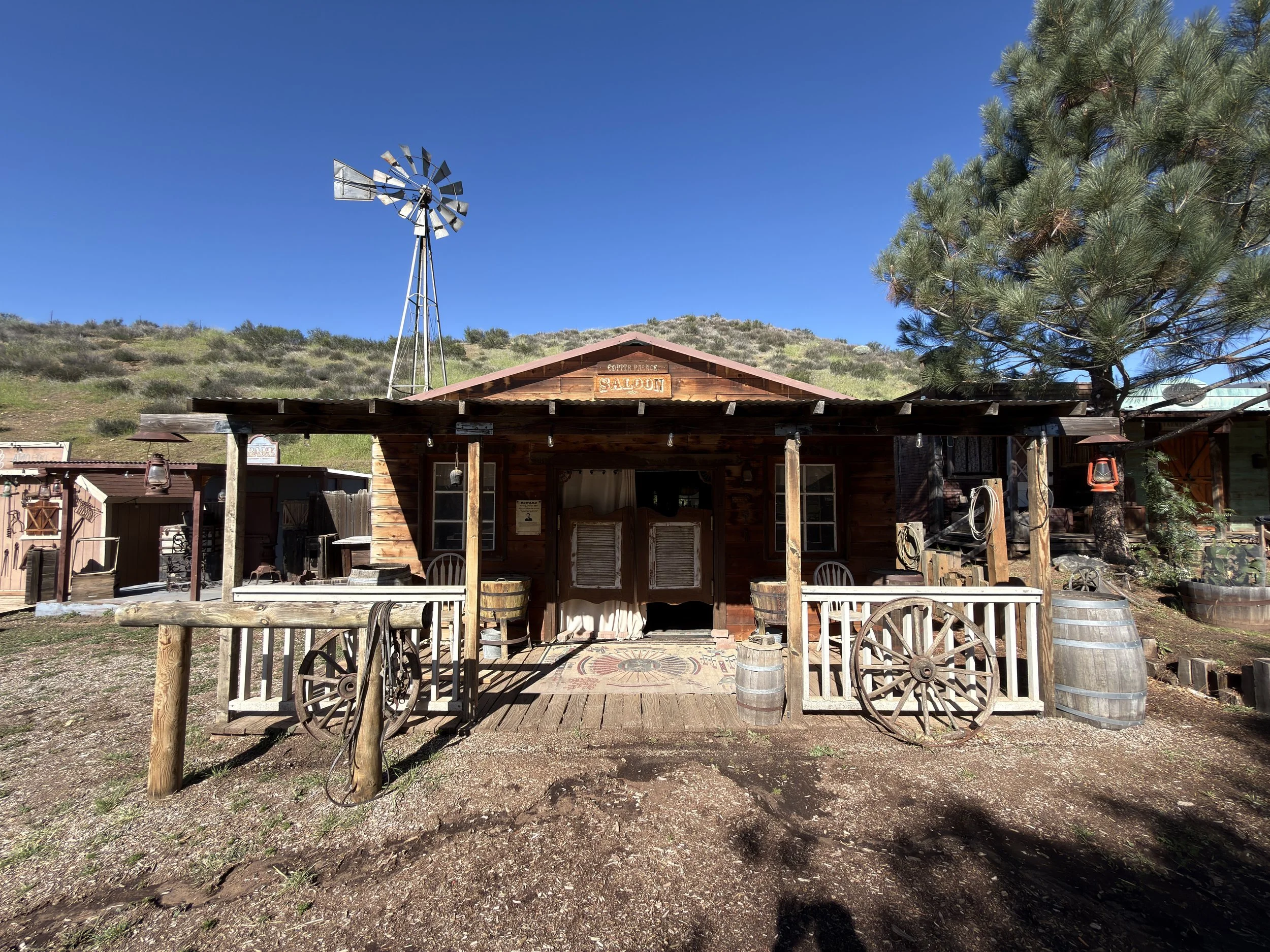
Location Scouting
Filming in Agua Dulce, CA
We shot the film on location at a standing Saloon set in Agua Dulce, CA. When the director, Adam Moses, and I scouted the location, it was a beautifully clear, sunny day. It was really shaping up to be a great location for the shoot. However there were a few elements about it that would turn out to be problematic as the shoot day got closer.
Interior window light during the scout. With our original blocking this window would serve as the key light in my original lighting plan.
This was the angle we would shoot Landon entering the Saloon from in silhouette.
Wide interior shot from the scout, notice the sheet metal ceiling. That will come into play later in the breakdown.
We didn’t shoot much from this angle of the bar, but the reverse added a nice layer of depth to the card contest scene.
Notes about the location while scouting.
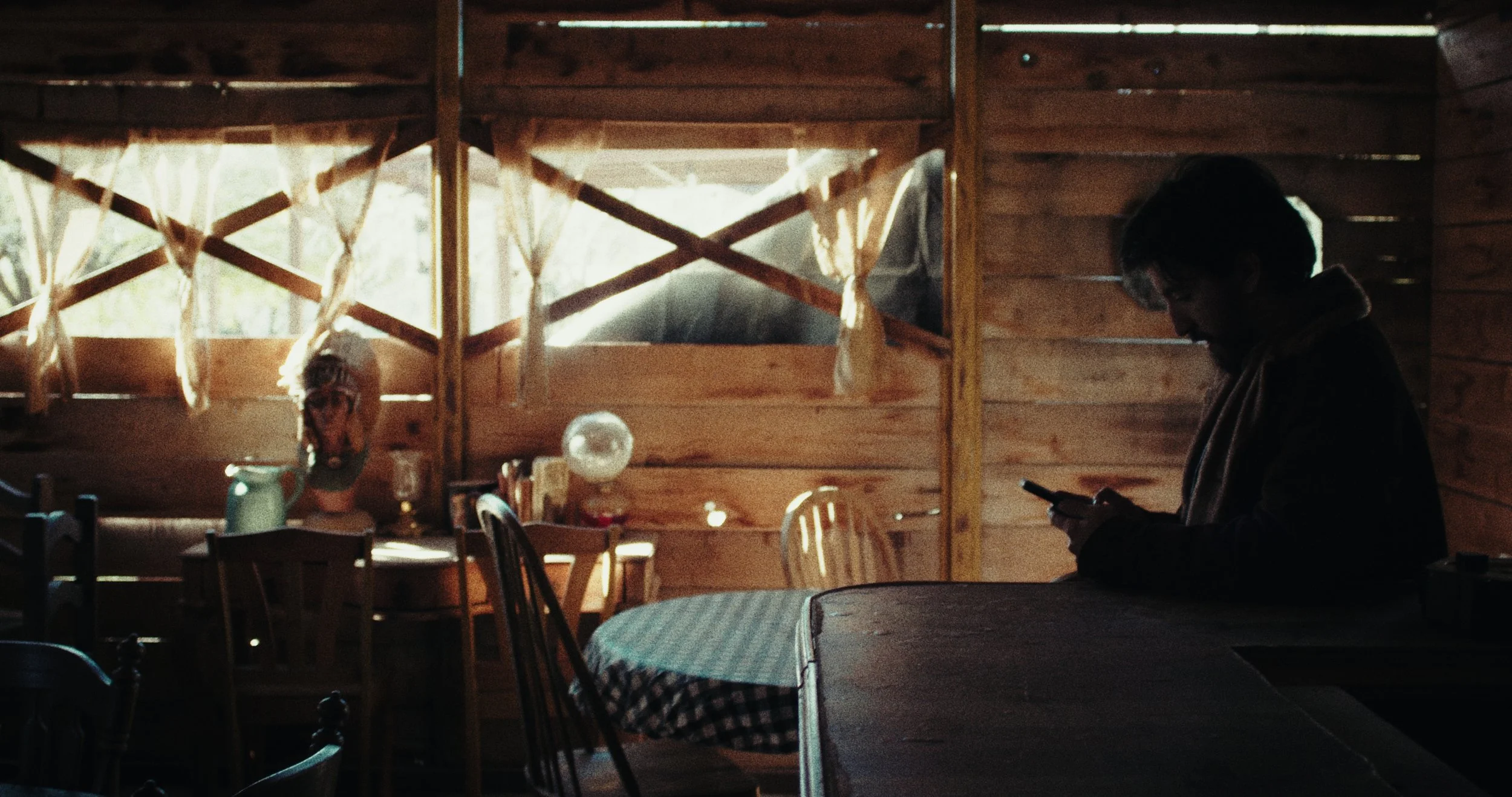
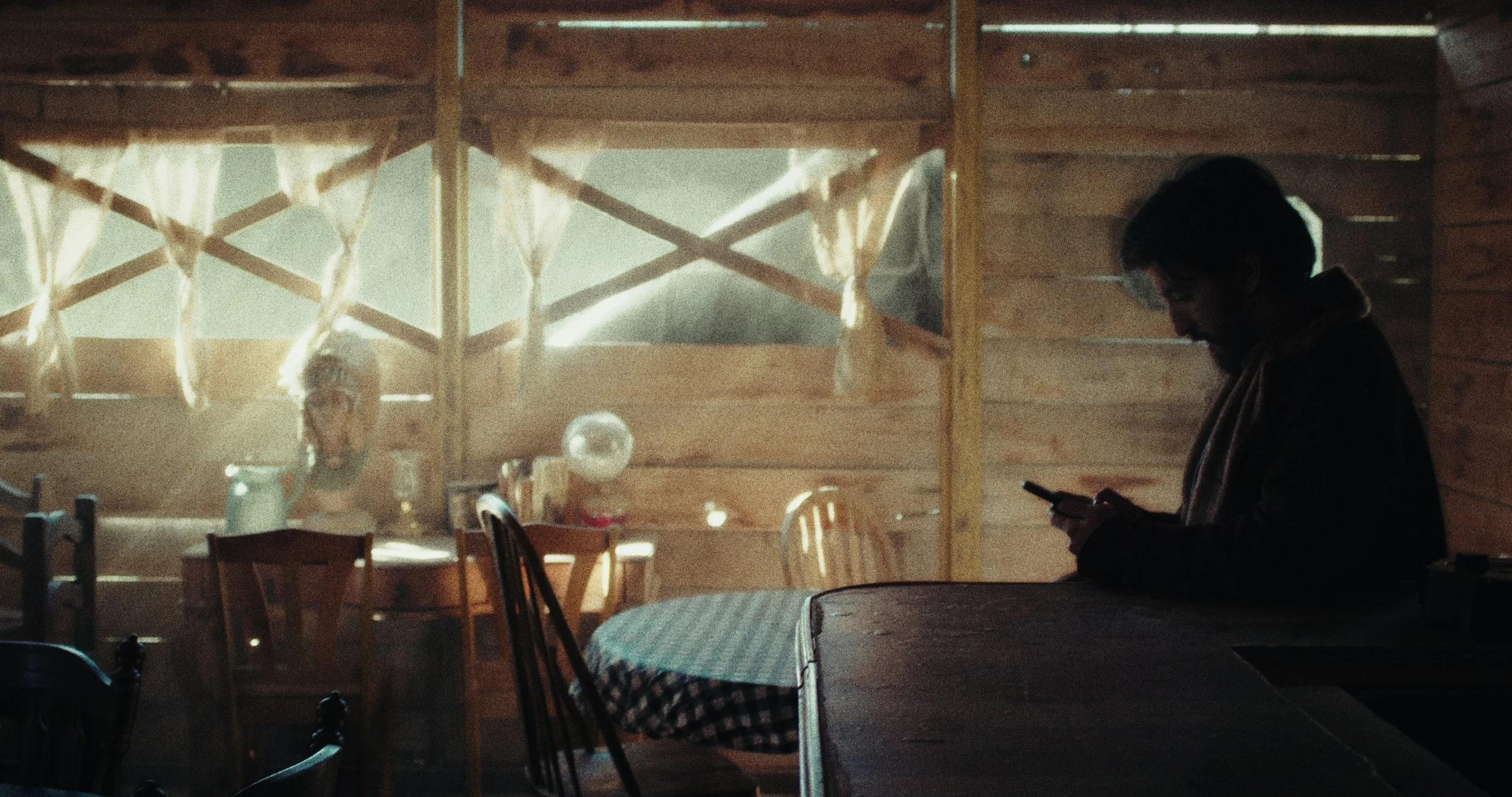
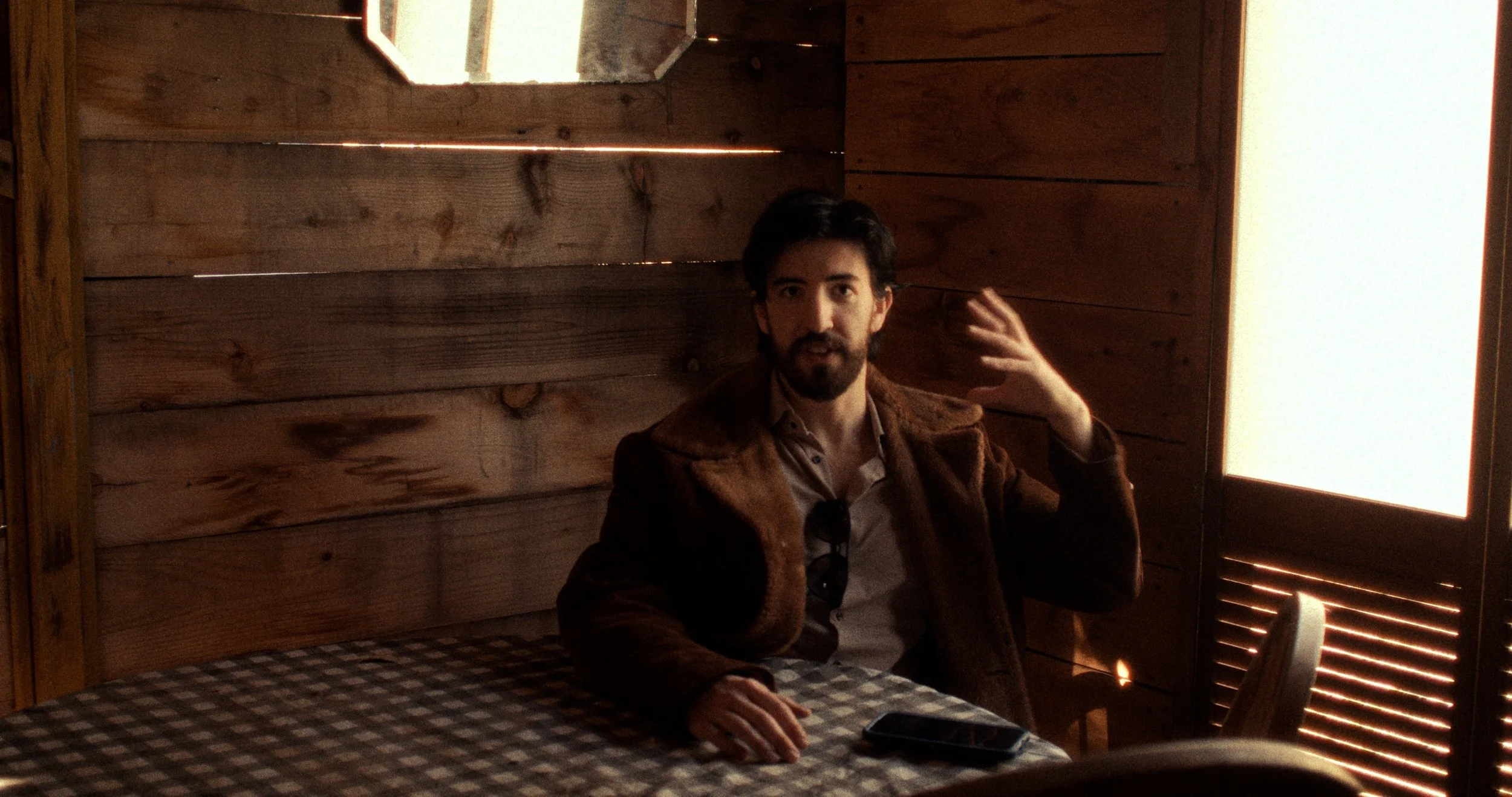
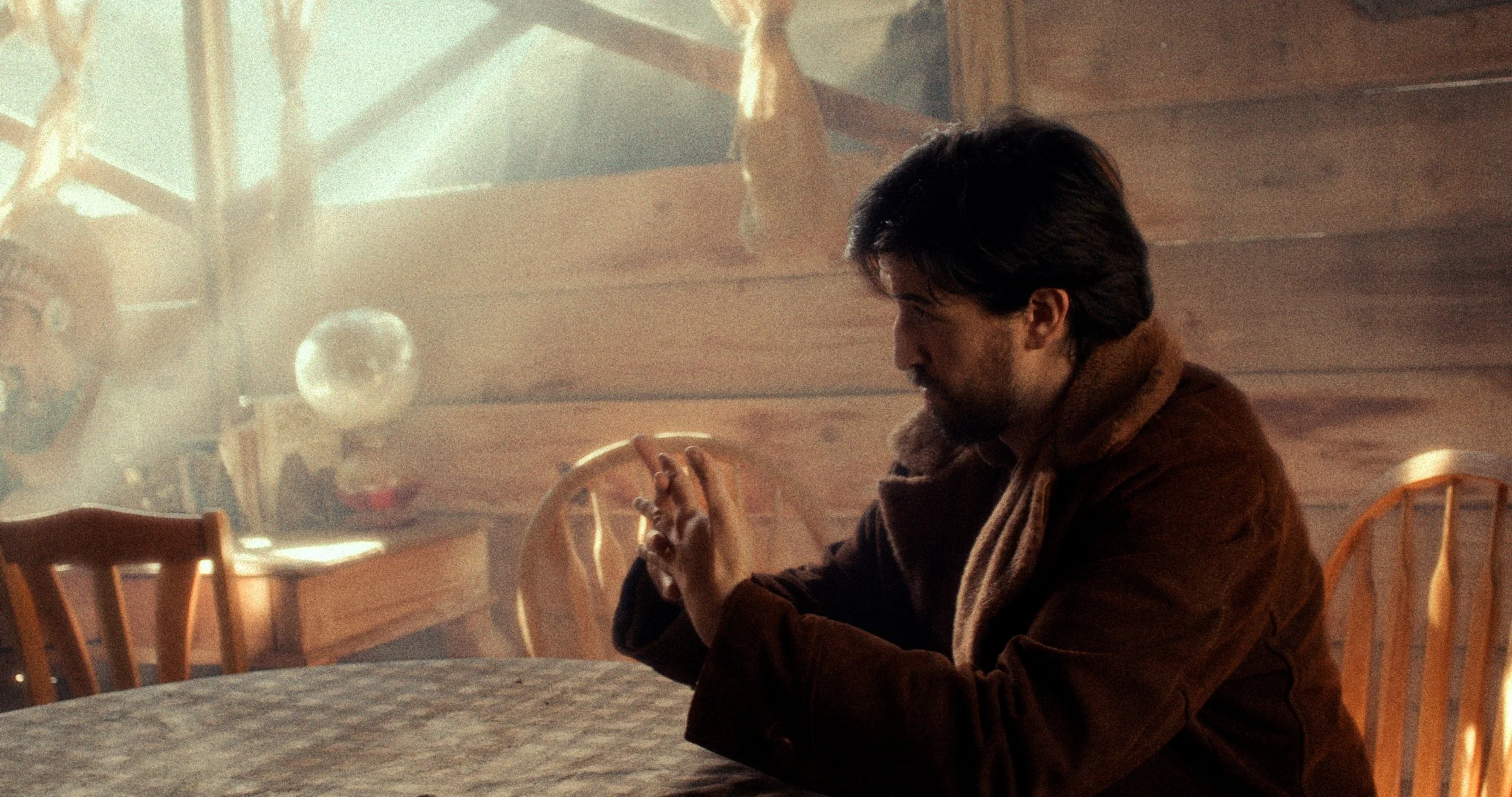
My plan on scout was to lean into the harsh sunlight, utilizing dappled pockets of light and having shafts of light coming through the windows, rather than only lighting with broad soft lighting. This was as much a creative decision for the look as it was a budgetary one, since I knew we wouldn’t have the grip equipment or man-power to create big soft light sources.
During our location scout I did something a little different by bringing the camera we’d be shoot on, my Blackmagic, with me to shoot some test footage. It’s not often that I have the ability to bring the camera and lenses we’ll be using with me to a location scout as I typically rent equipment for each job.
When I brought the footage I took back into Davinci Resolve I tested out what the shots might look like with adding haze, by adding the Cinematic Haze plug-in from the OpenFX library to one of the nodes. I thought this could be a good backup option for showing the hard rays of light if we weren’t able to get a proper haze machine for the shoot.
Once the shoot day arrived however, that whole lighting approach would end up going out the window.
Initially Landon Dunn’s character would be introduced backlit in silhouette in the doorway. To plan that, I used Sun-Seeker to map exactly where the sun would sit relative to the doorway and windows, so I’d know what time of day he would be ideally backlit, and when the sun would be raking across the tables.
Dealing with Inclement Weather
Los Angeles isn’t really known for getting much rain, but the day of our shoot it got a lot of it, all at once, like flash flooding in areas bad. We didn’t have the ability to move the shoot date; the actors’ schedules were locked, the location rental was locked, and the four hours we had to shoot were firm, rain or shine.
So we made the call to shoot in it. I was a bit concerned that the rain would make it difficult to get into location because the road in to set was very steep and turned pretty muddy with the rain. We decided to move crew parking to a nearby restaurant’s parking lot and the crew and gear were carpooled into location in the director and producer’s 4×4 capable vehicles. After we got to location however, that didn’t mean our troubles were over.
The entire look of the film had been built around hard sunlight. But the overcast, rainy light created a broad soft light source, and it made the room that’s supposed to feel warm with pockets of hard light coming in, feel cool and bleak. We lost the silhouette shot I’d had in my head, but we gained a kind of damp, underlying dread that ended up serving the tension of the film better than my original plan. Sometimes the change in weather is exactly the element you need to give a project a unique look.
Joe Zieja and Adam Moses walking to set during the rainstorm.
Jacob Dalton having just “fired” a shot to clear out the saloon. All of the gunfire in the film was added entirely in post production with VFX and only non-firing dummy weapons were used on set.
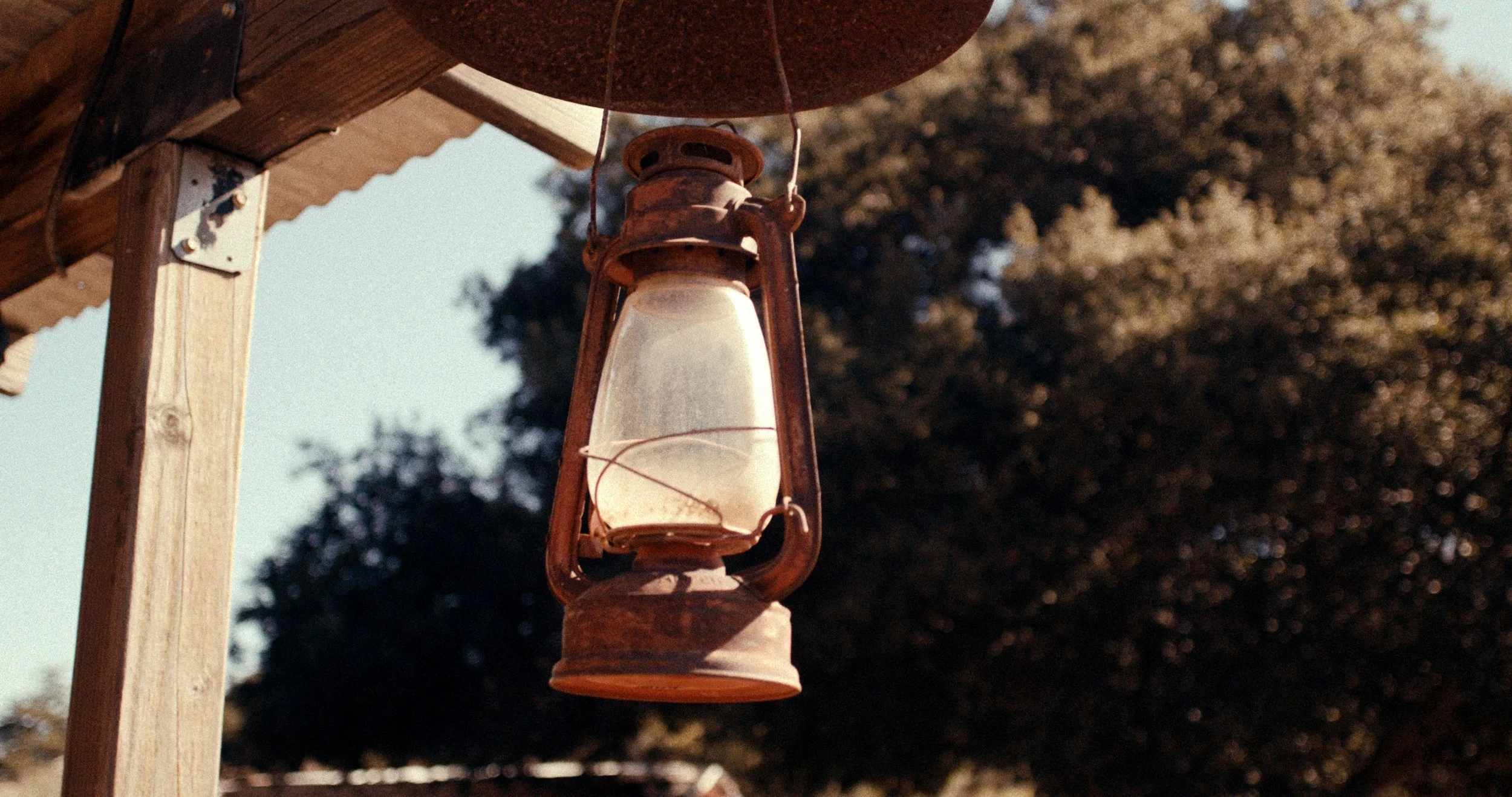
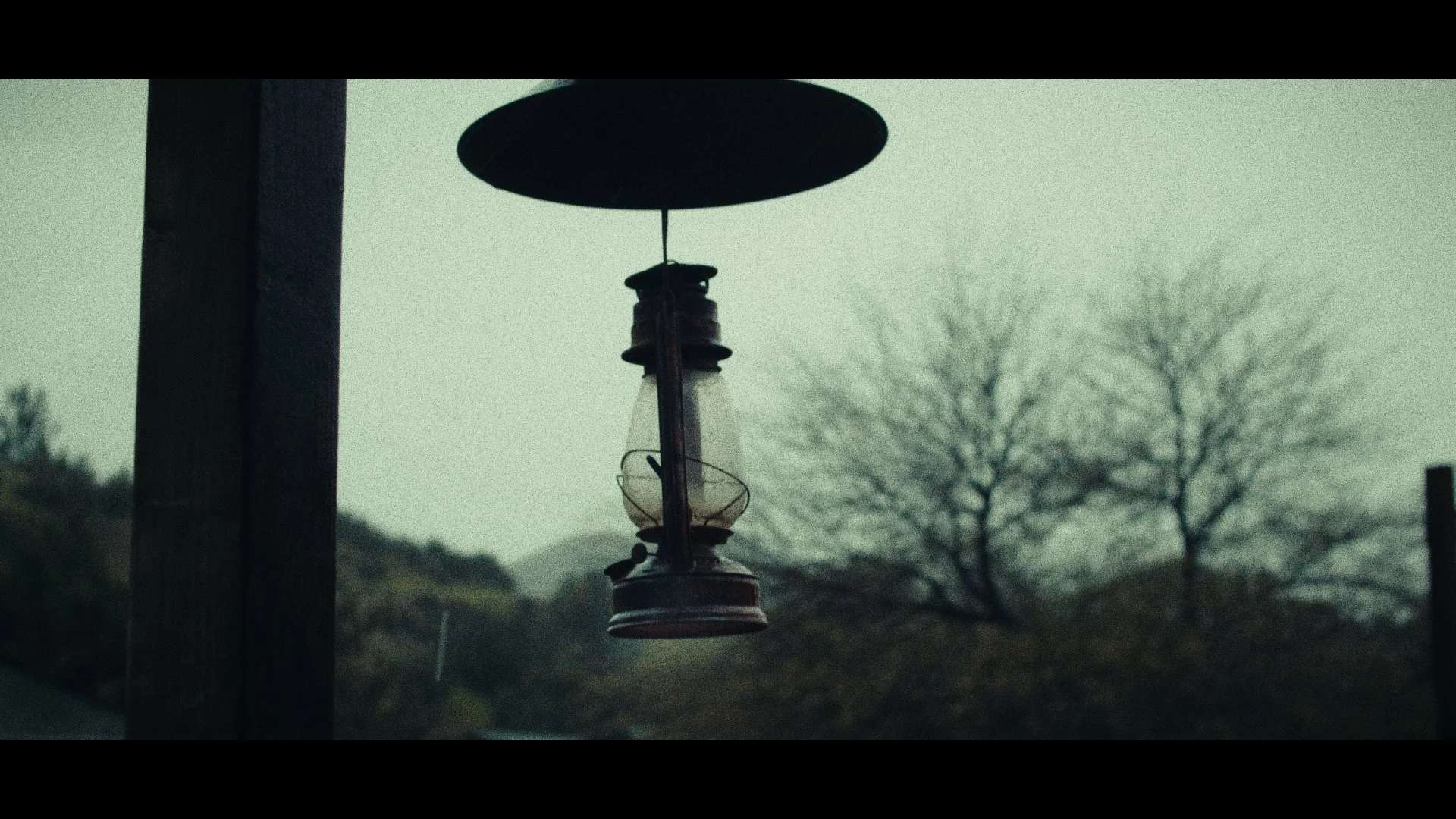
Here’s a still from the weather we had on our location scout compared to the conditions we ended up filming in on the day.
Lighting the Saloon Interior
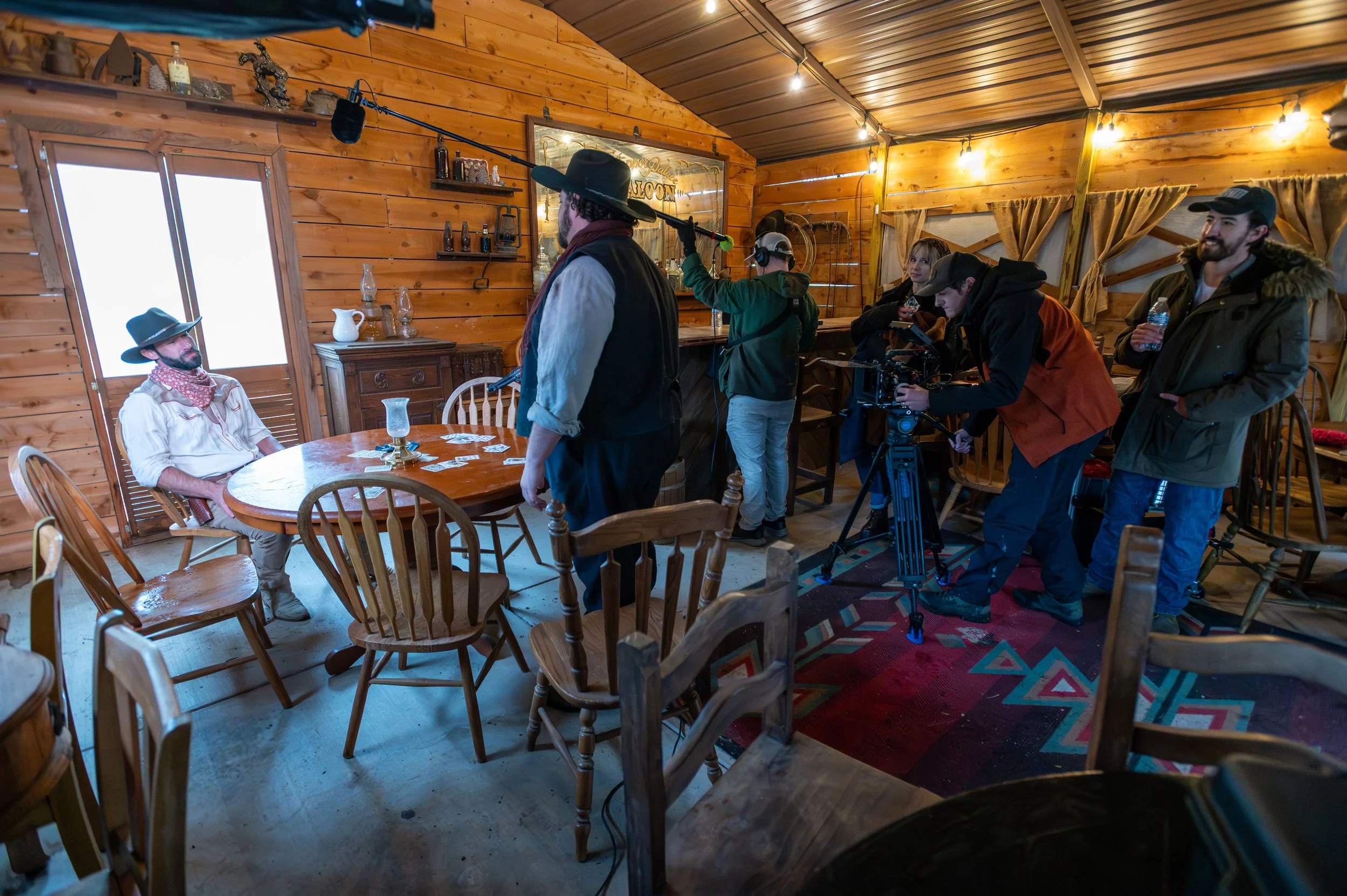
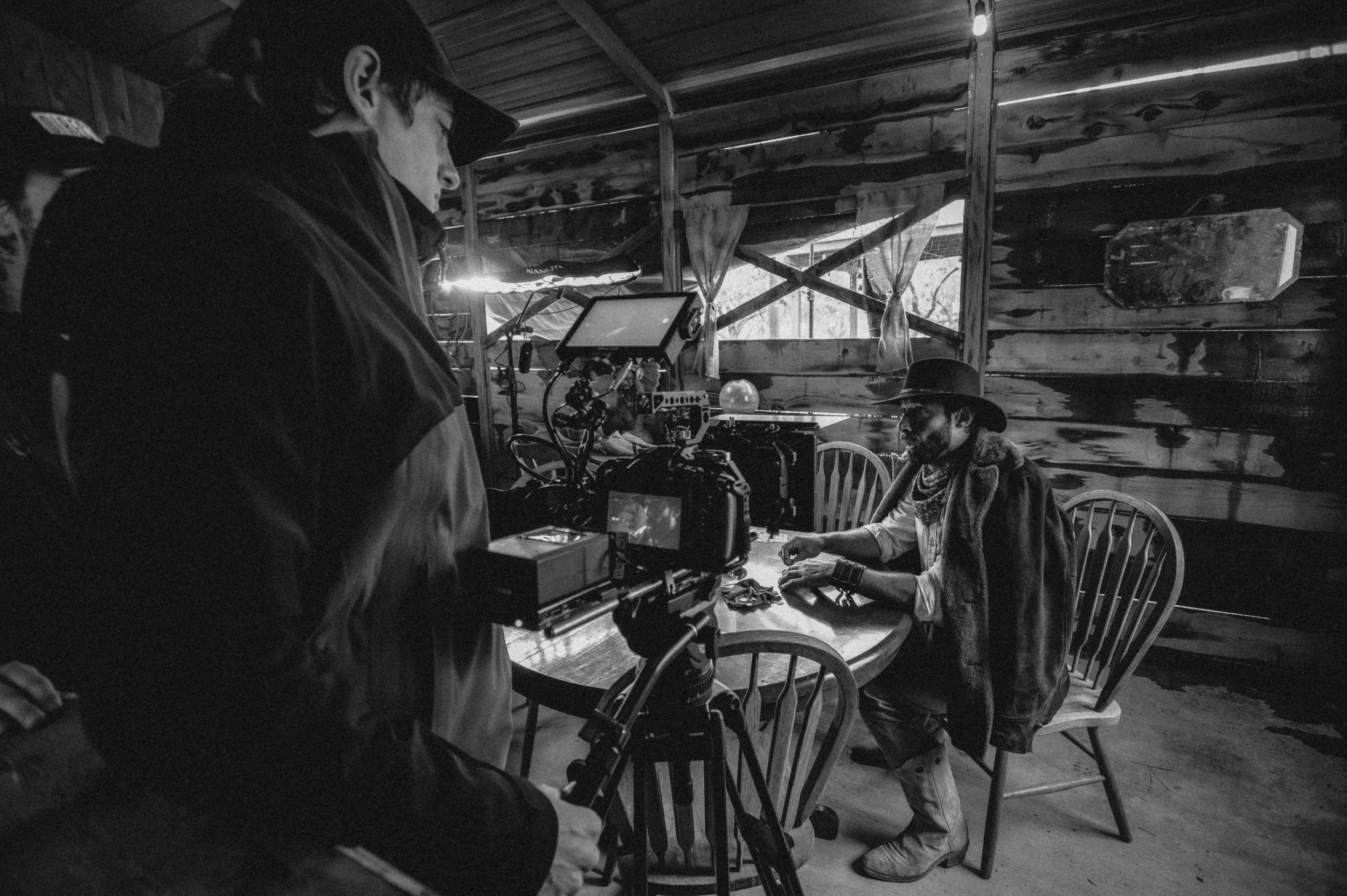
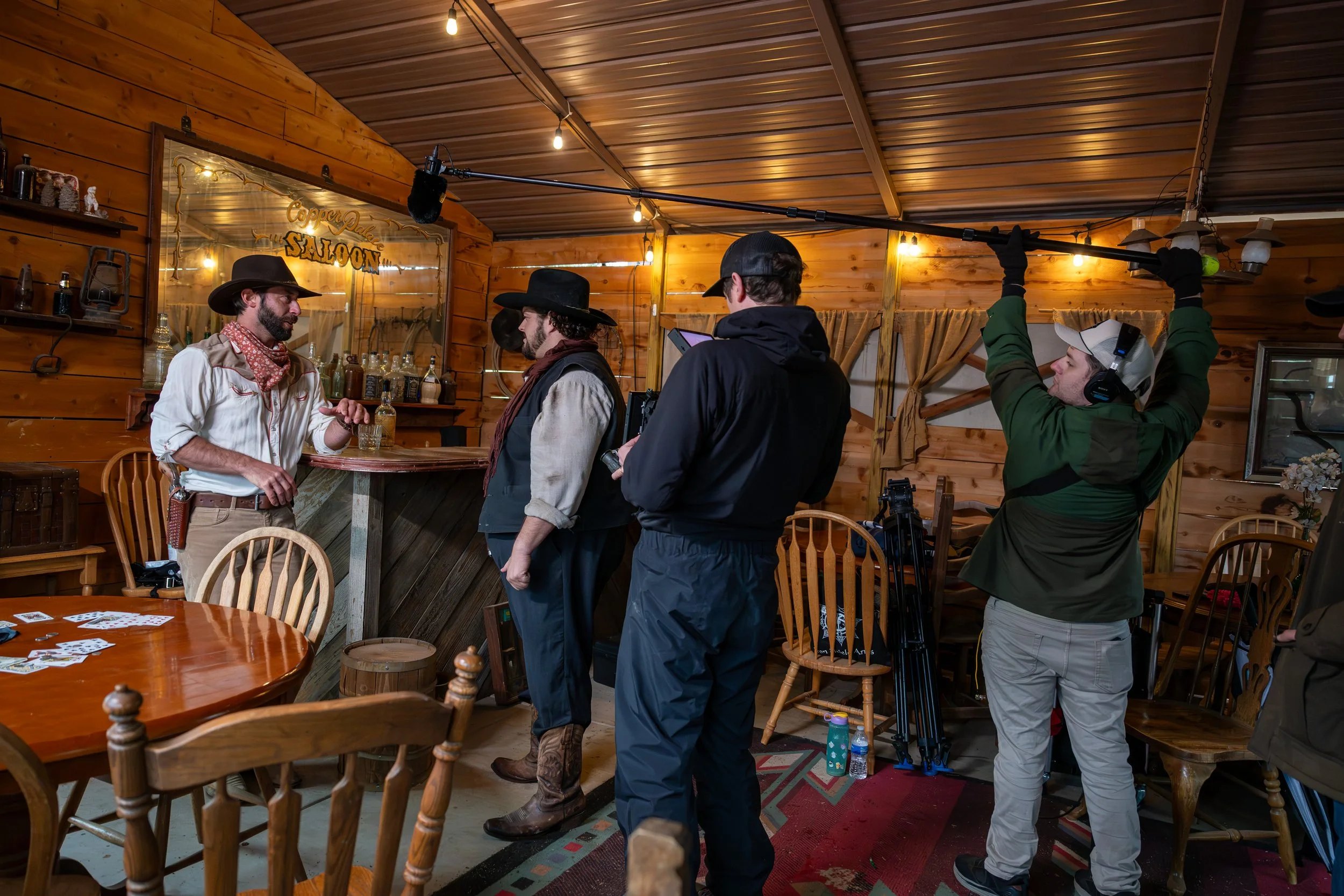
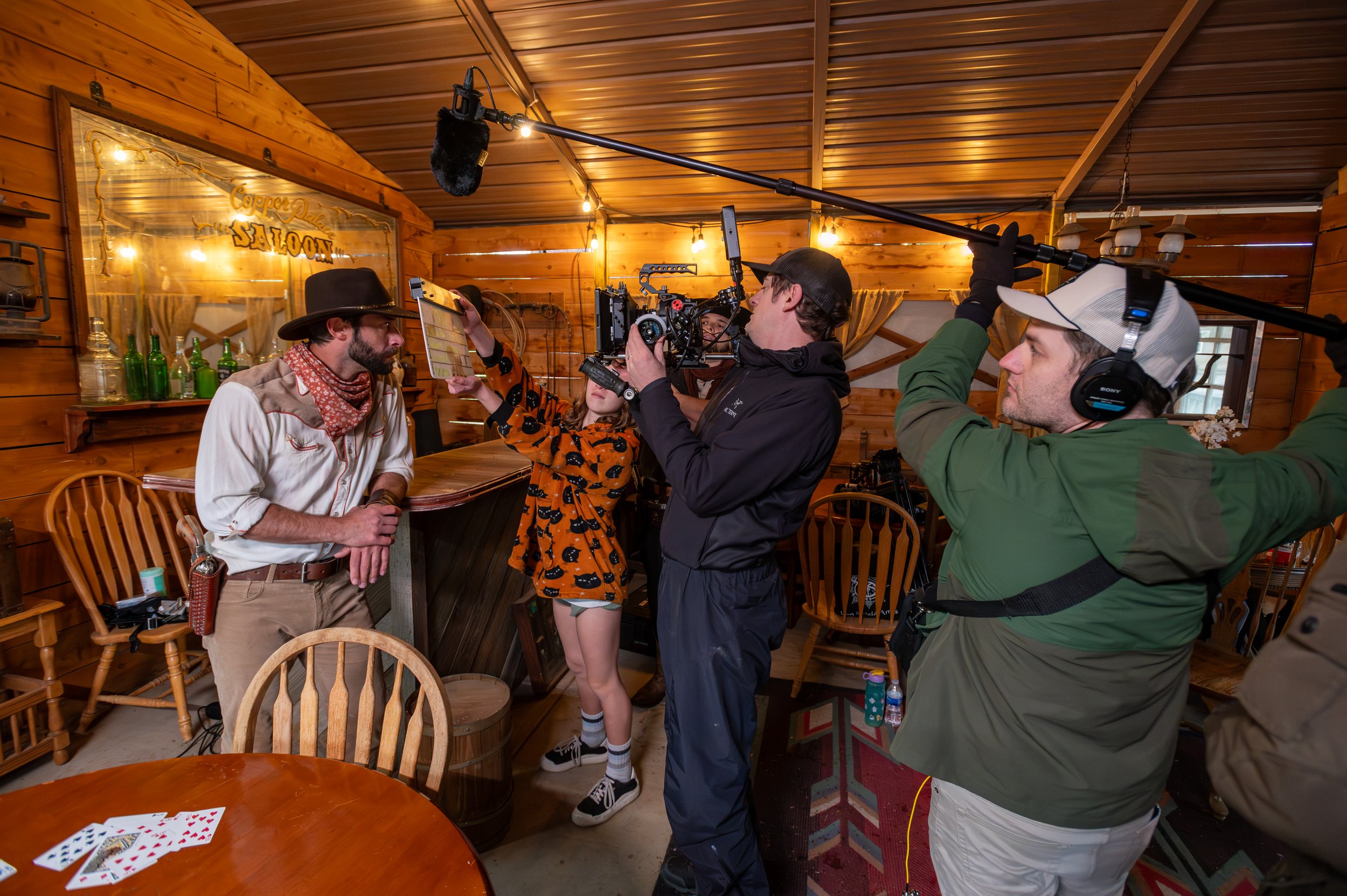
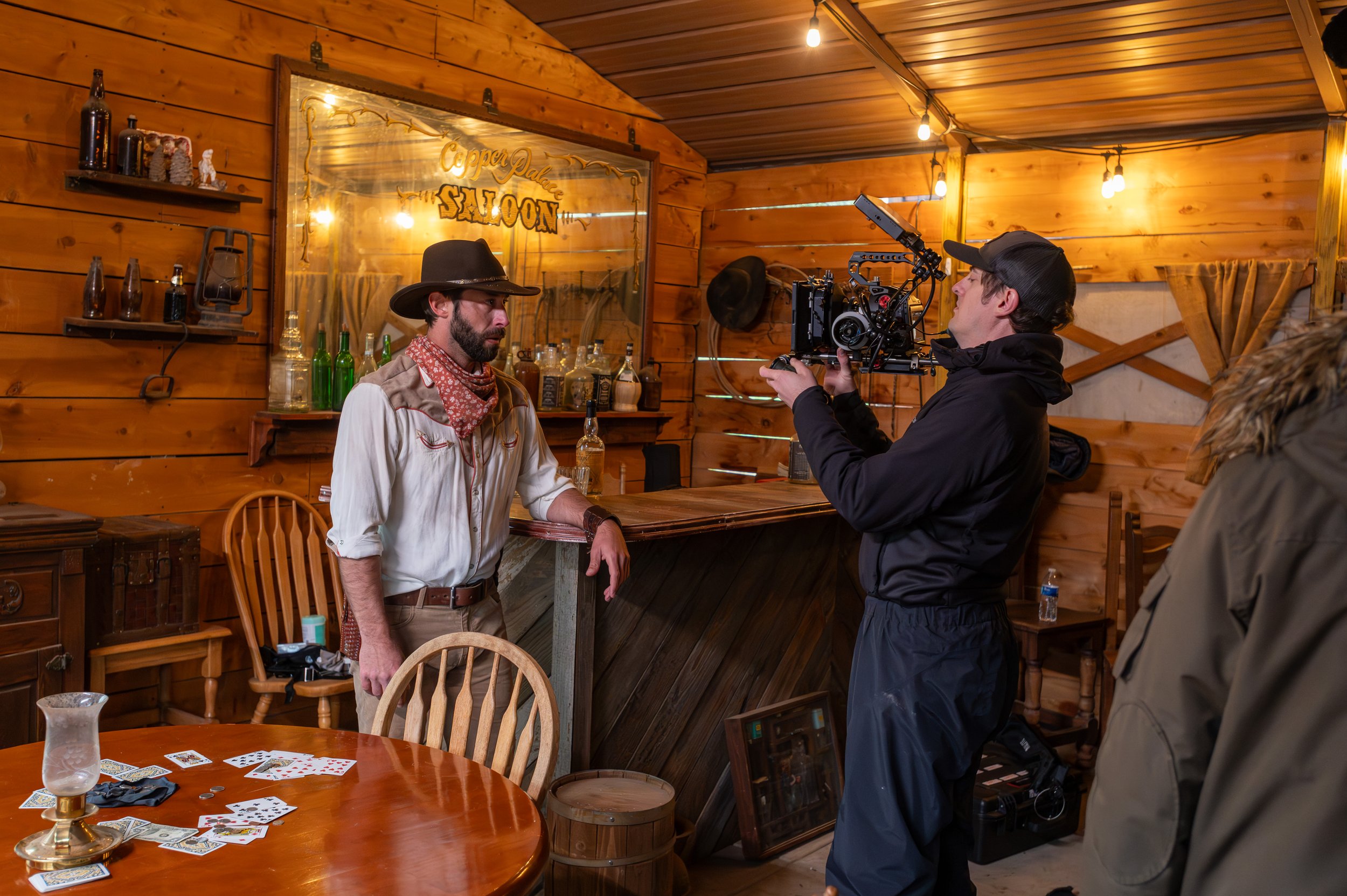
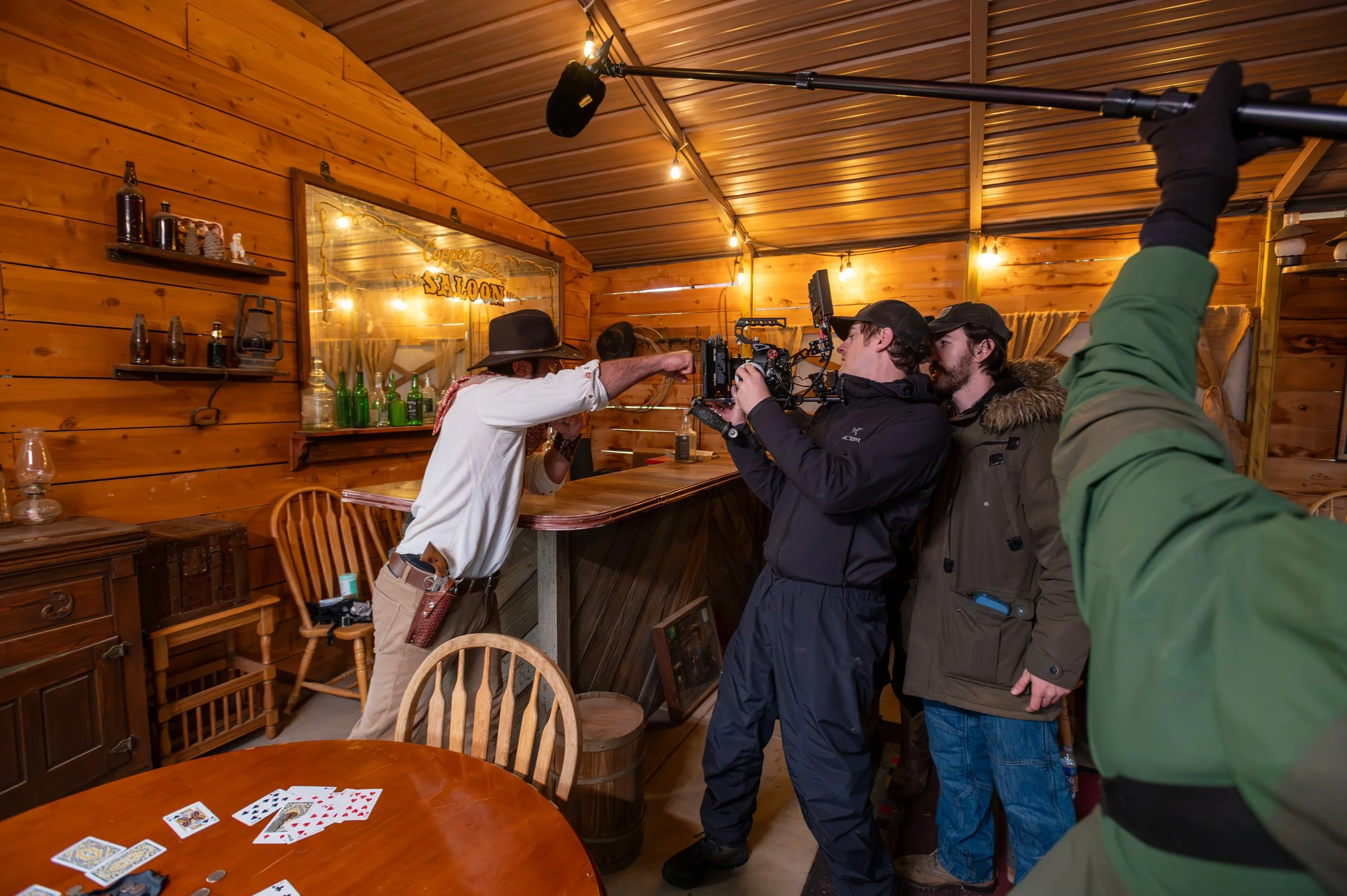
With the hard sun lighting plan officially scrapped, my job shifted to shaping the flat overcast light. We used the saloon’s practicals, a set of garden string lights strung throughout the space, to add pockets of warmth throughout the bar that contrasted the cool overcast wash. To add additional shape, I left the rain tarps that covered the windows closed behind camera to eliminate any spill into the space. I extended the soft light into the room with a set of 2 4’ Nanlite Pavo Tubes. Additionally, I had a Rosco DMG Dash light that I used for a handful of inserts to act as a specialty light and an eye light for some shots.
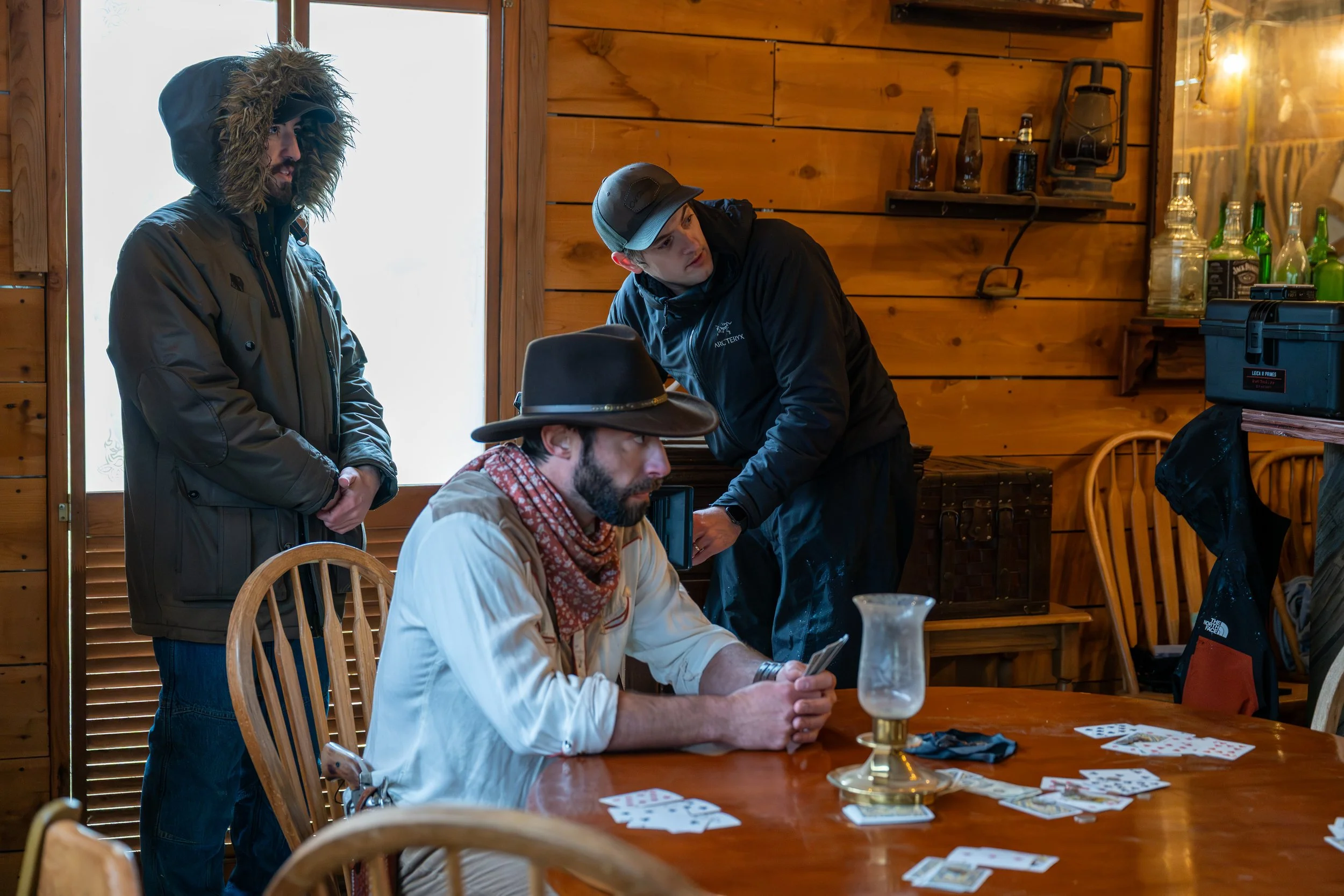
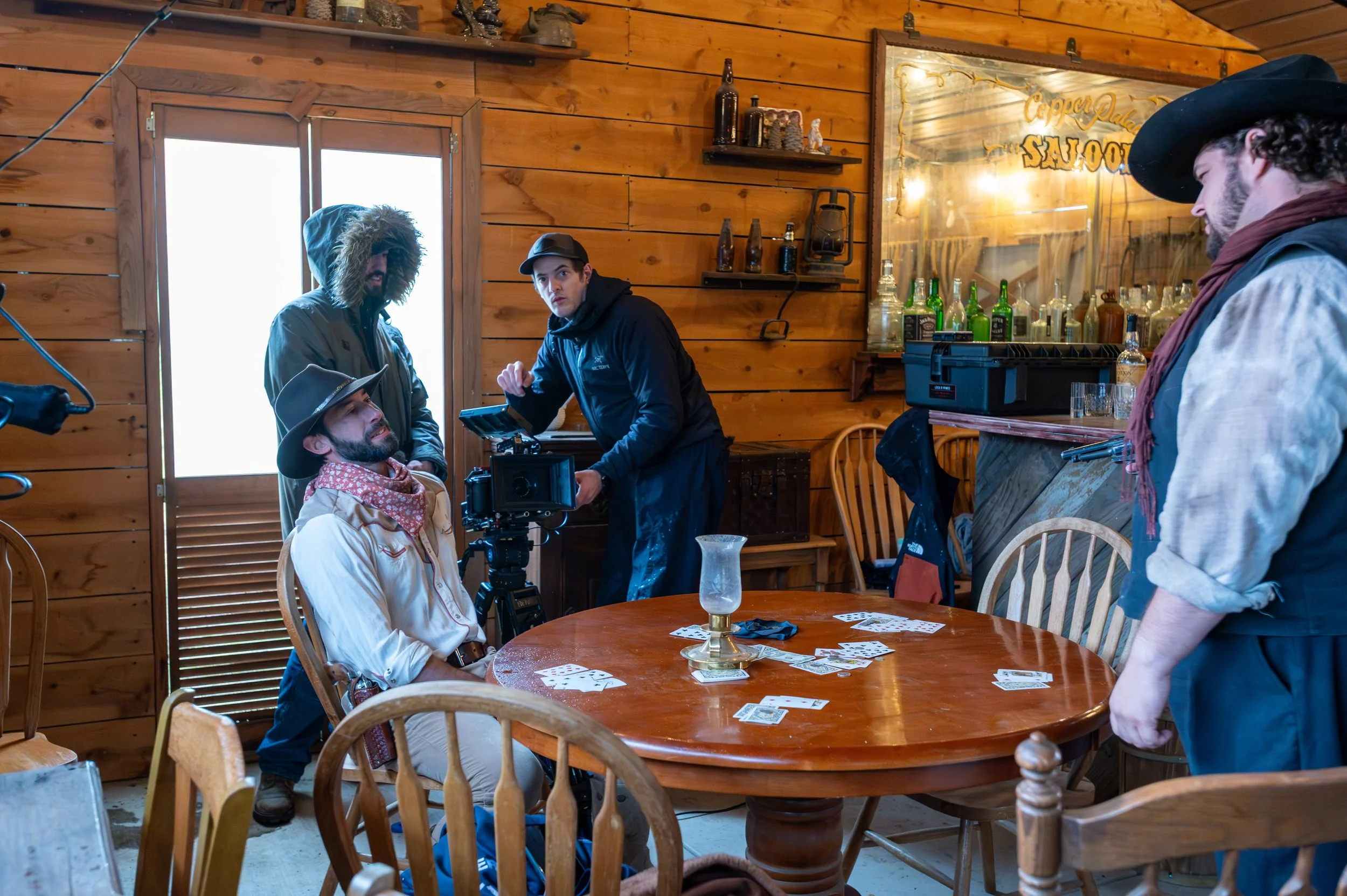
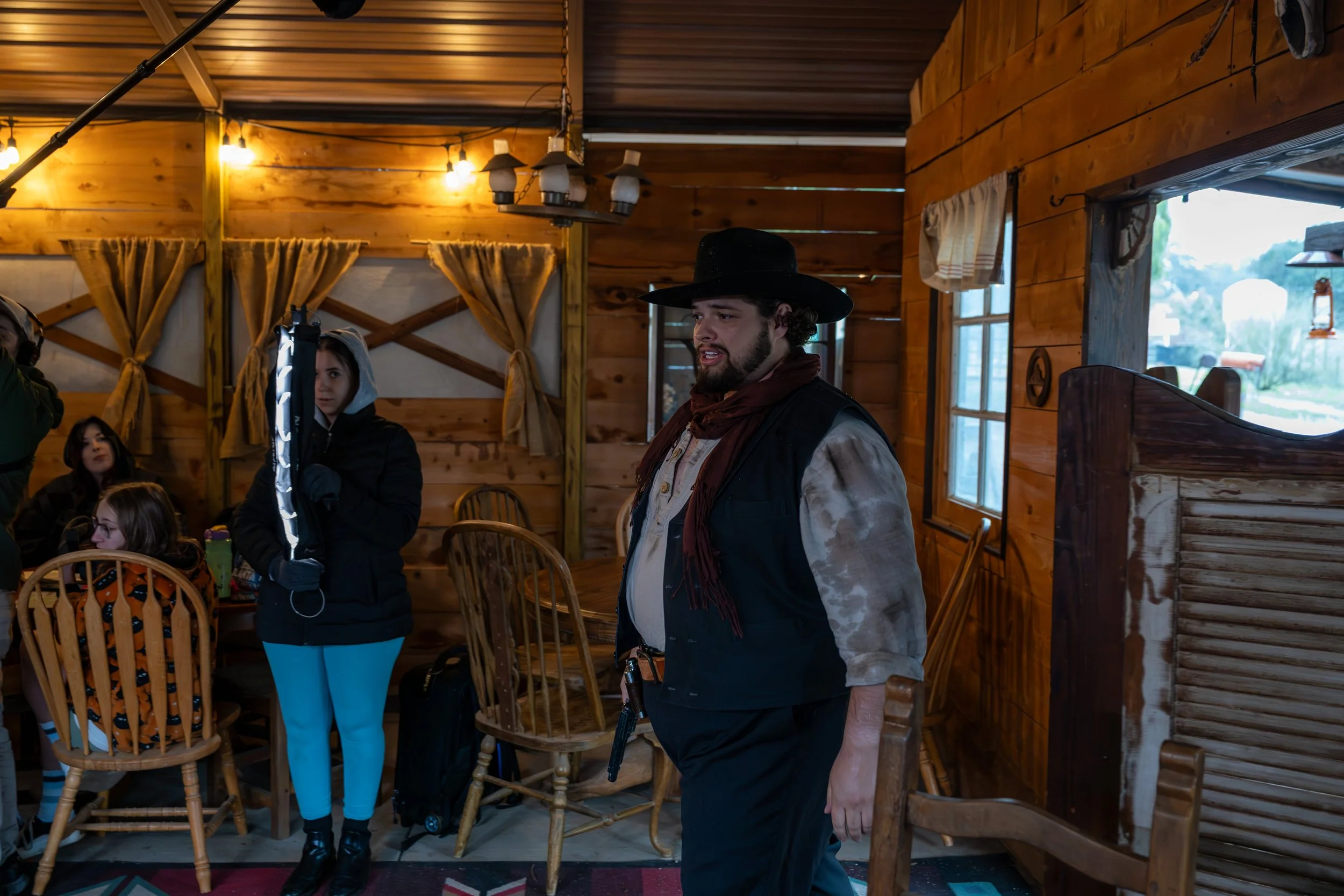
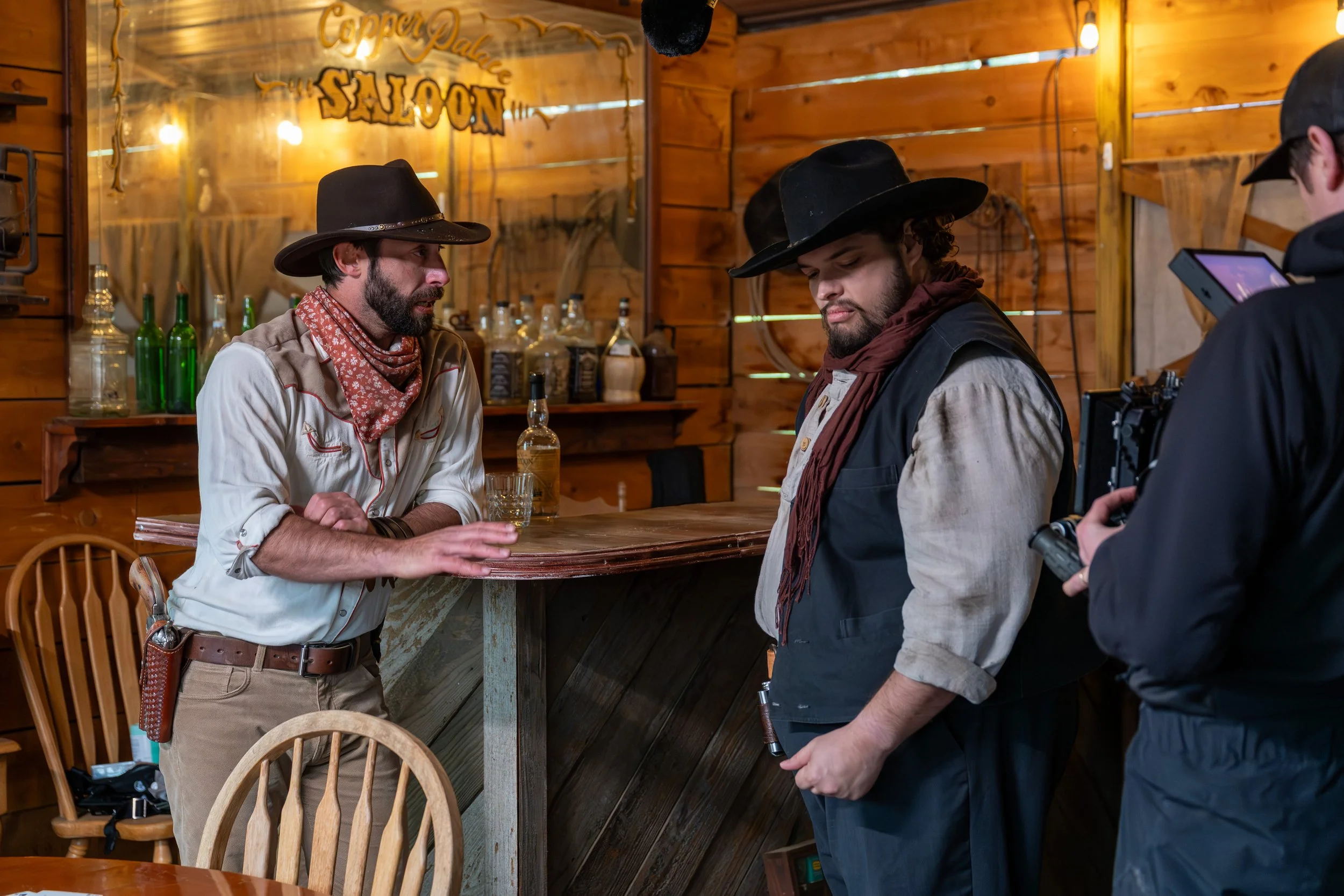
Director Adam Moses and Cinematographer Grant MacAllister discuss the lighting for the opening shot of Heath McCourt at the card table.
Director Adam Moses and Cinematographer Grant MacAllister lining up a shot on Landon Dunn.
Behind The Scenes to Final Frame
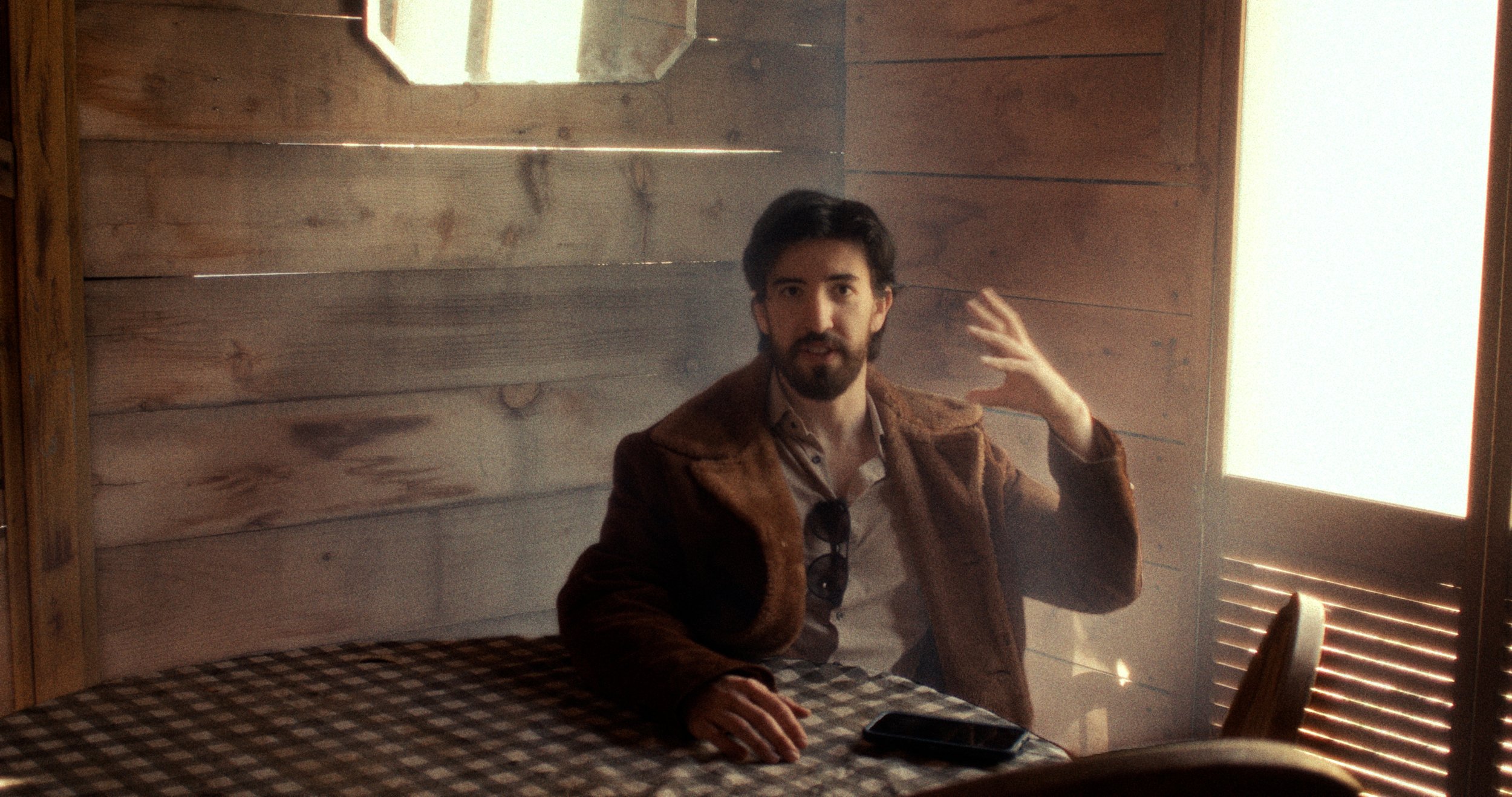
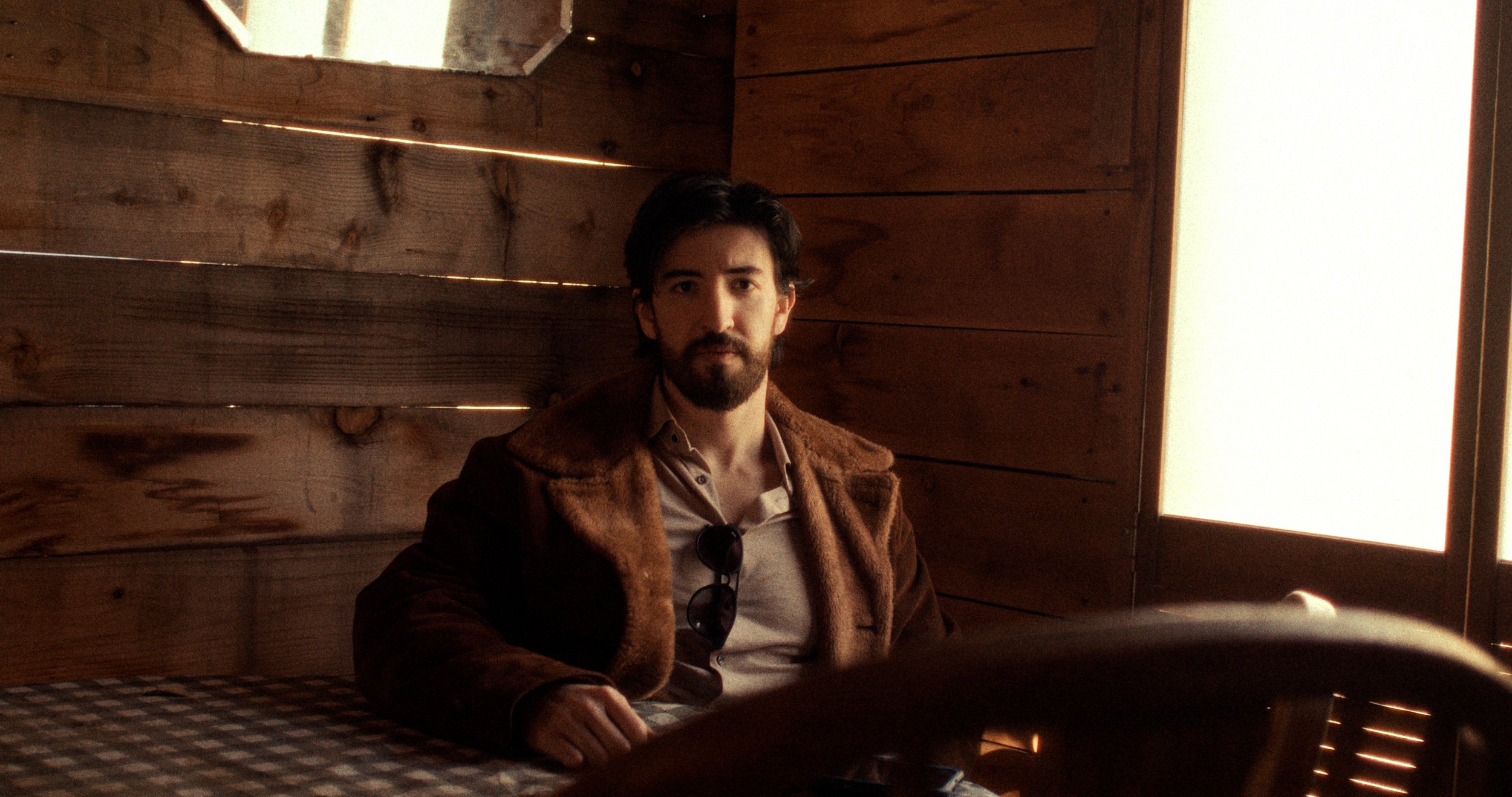
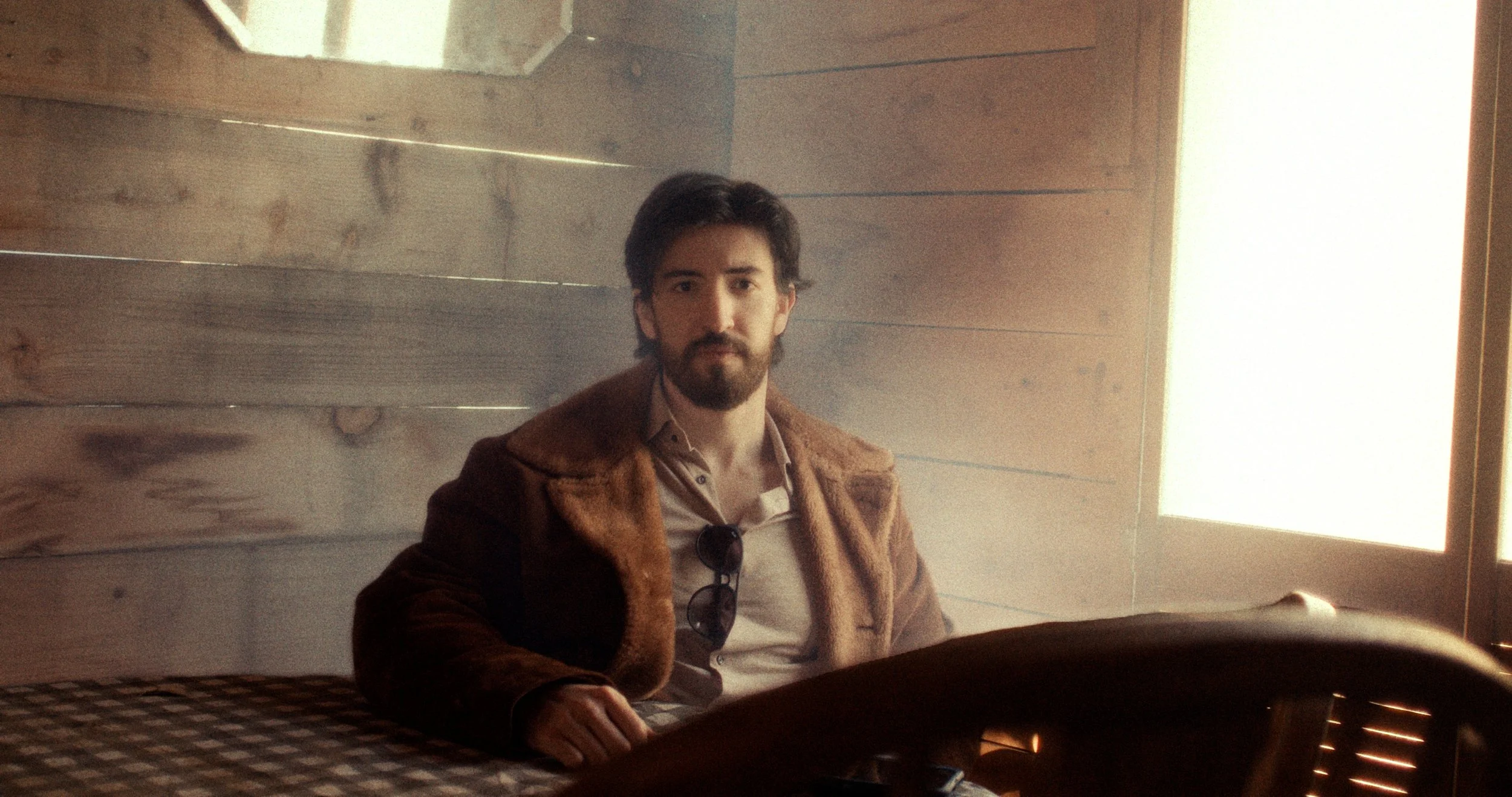
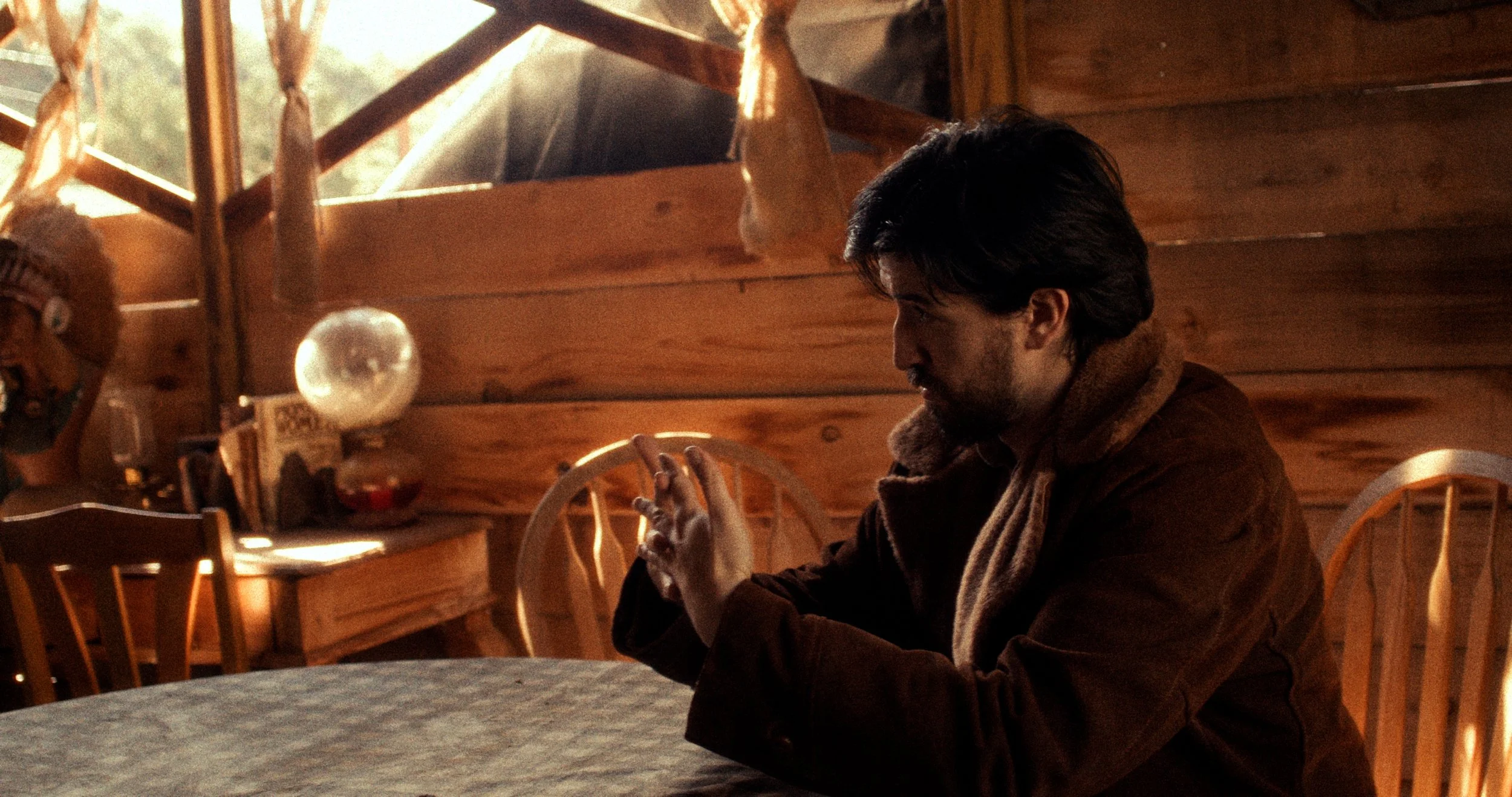
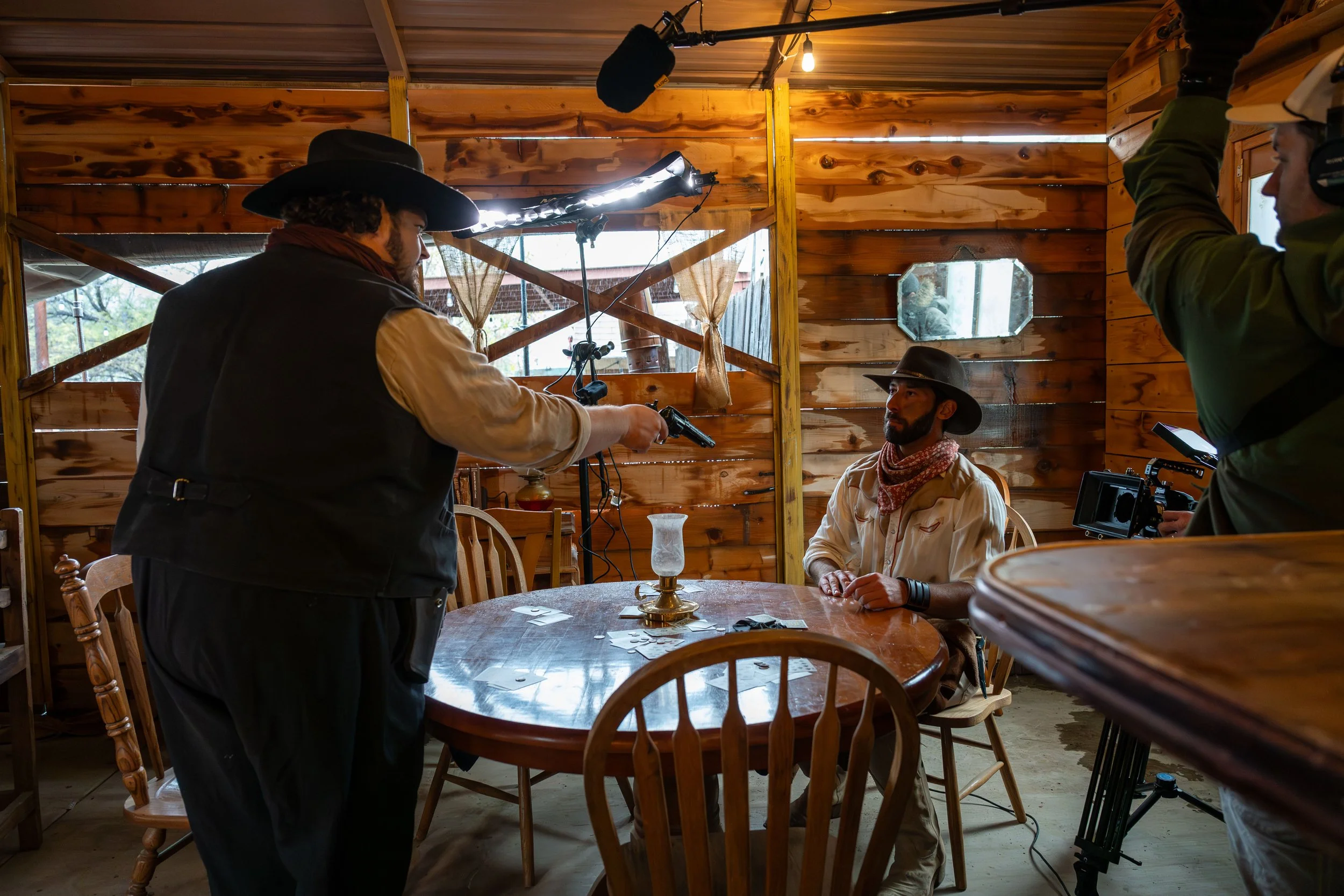
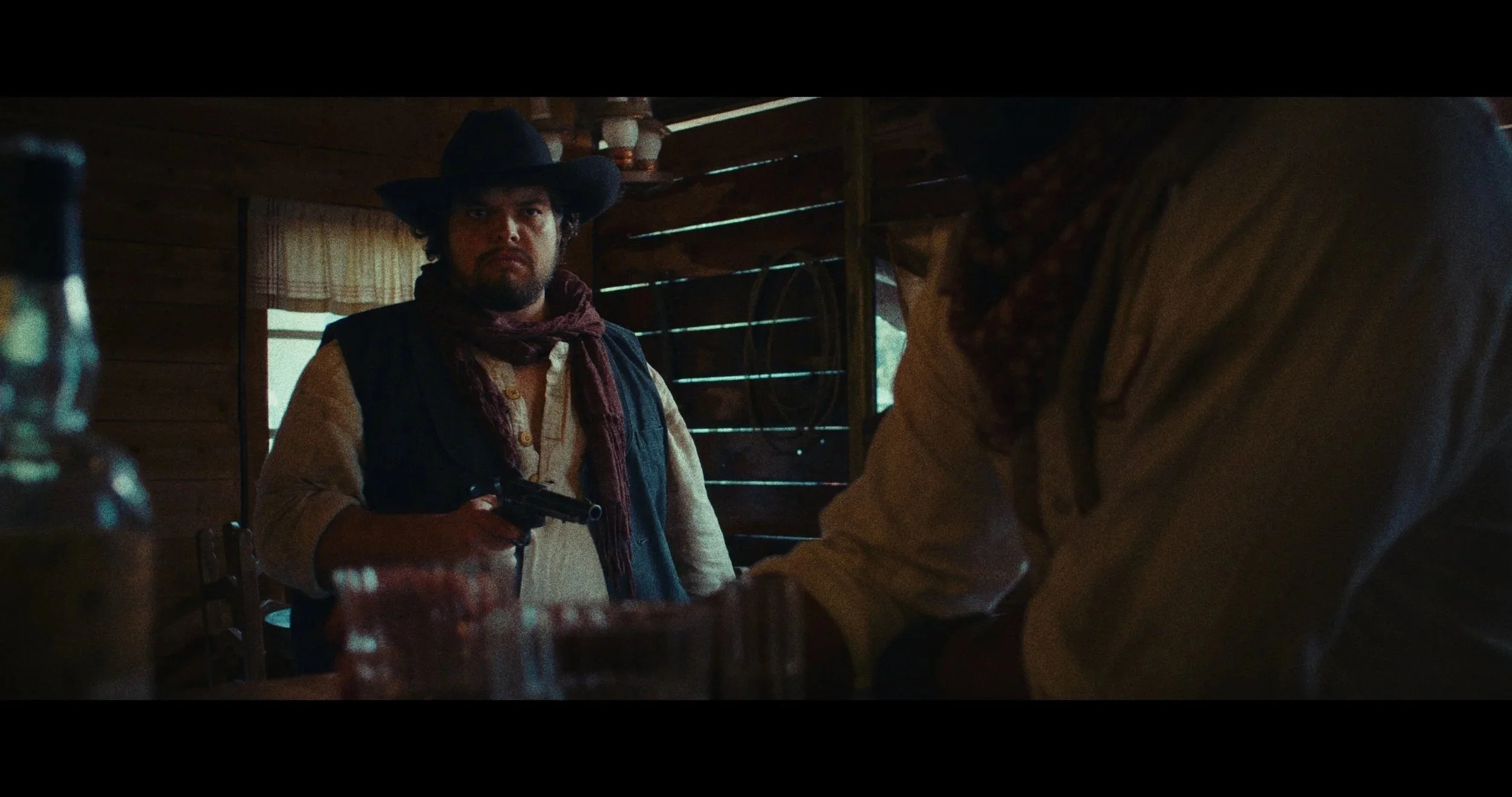
Below are a few side by side comparisons between the finished frame with the behind-the-scenes shots.
The Opening Shot
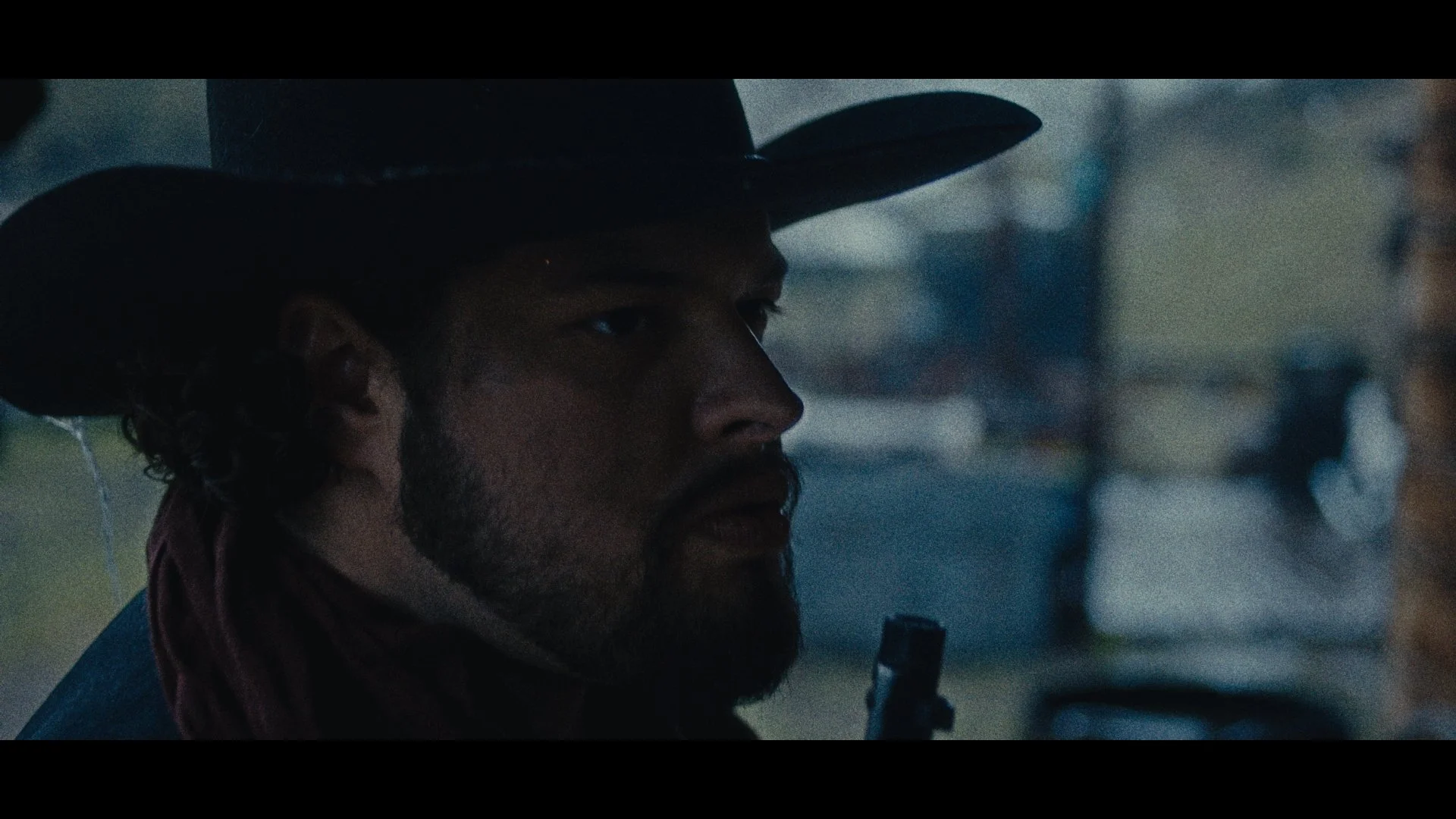
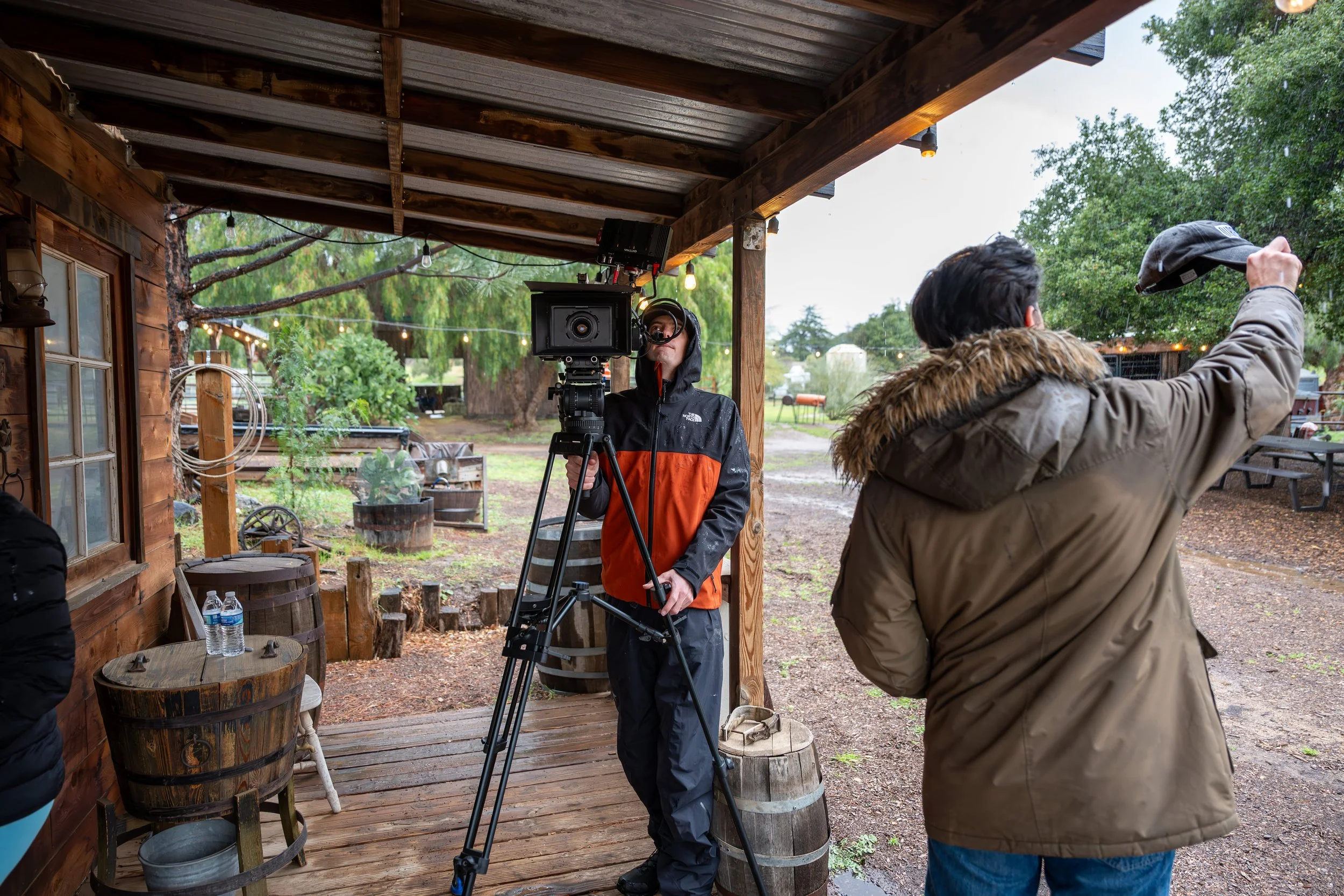
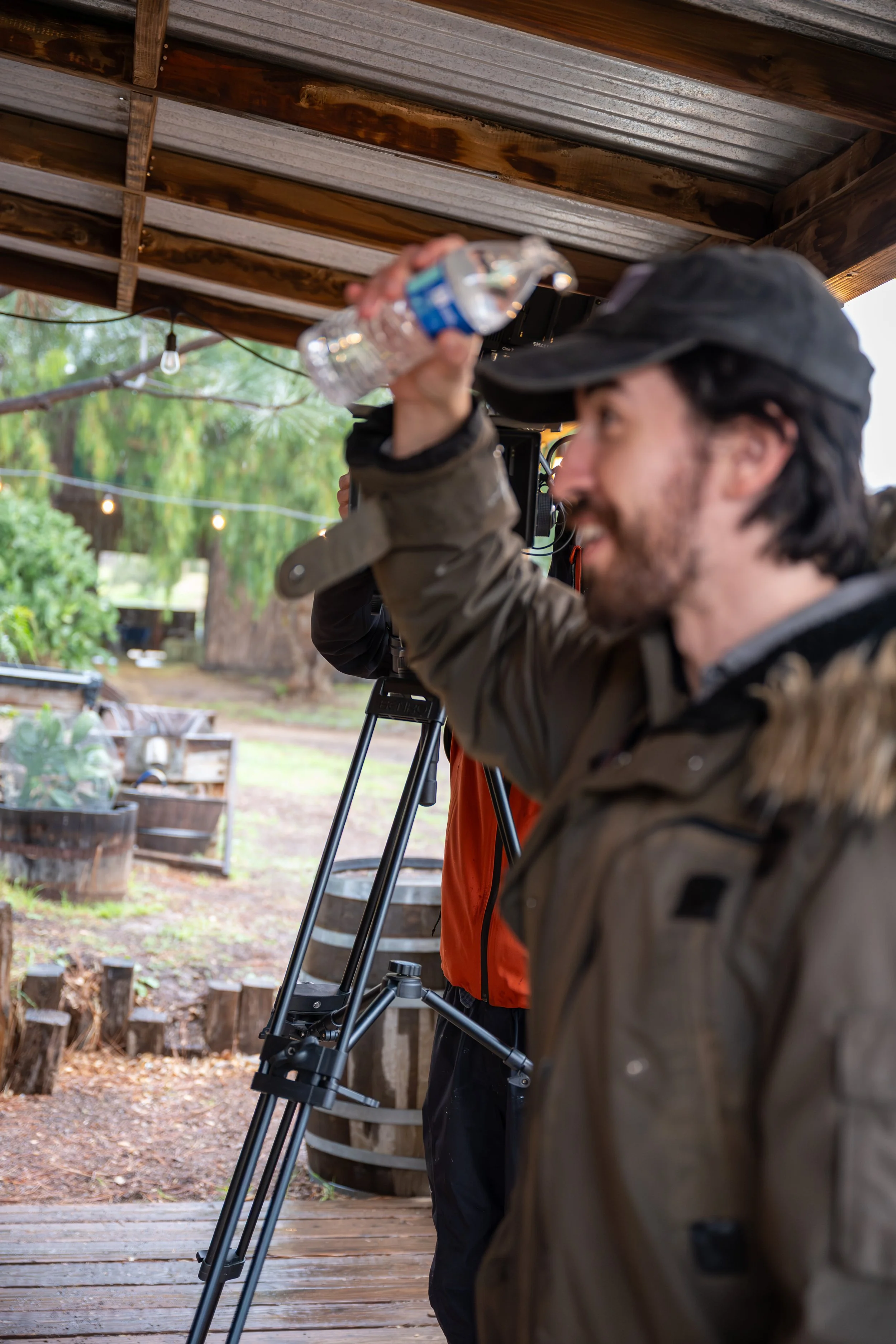
We wanted to have some rain coming off of Landon's hat here, just to get a little bit of extra feeling that he's been out in the weather. So we ended up actually just pouring a bottle of water onto his hat because the rain wasn't collecting as much on his hat in the amount of time we needed it to.
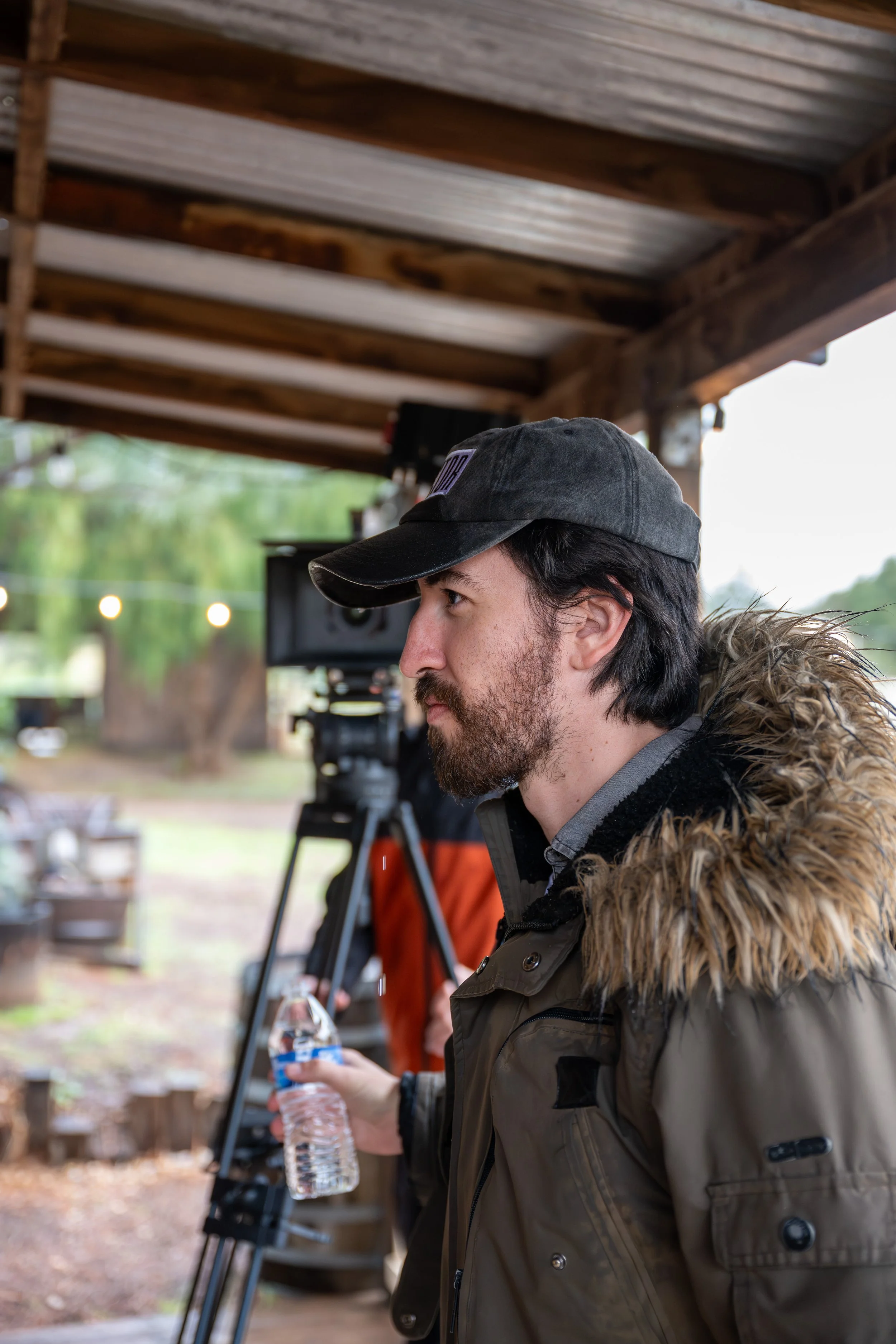
Heath McCourt’s Wide Shot
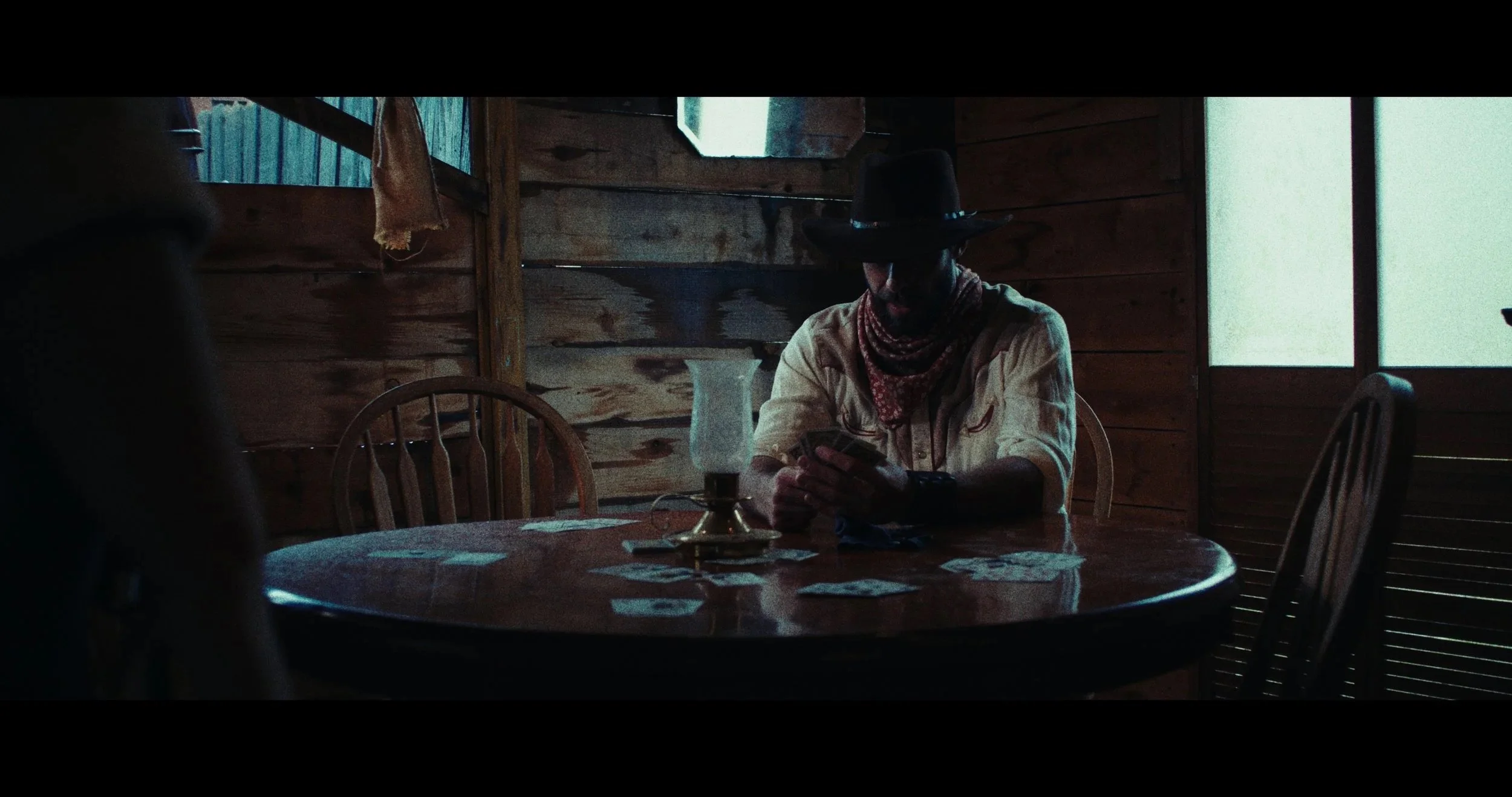
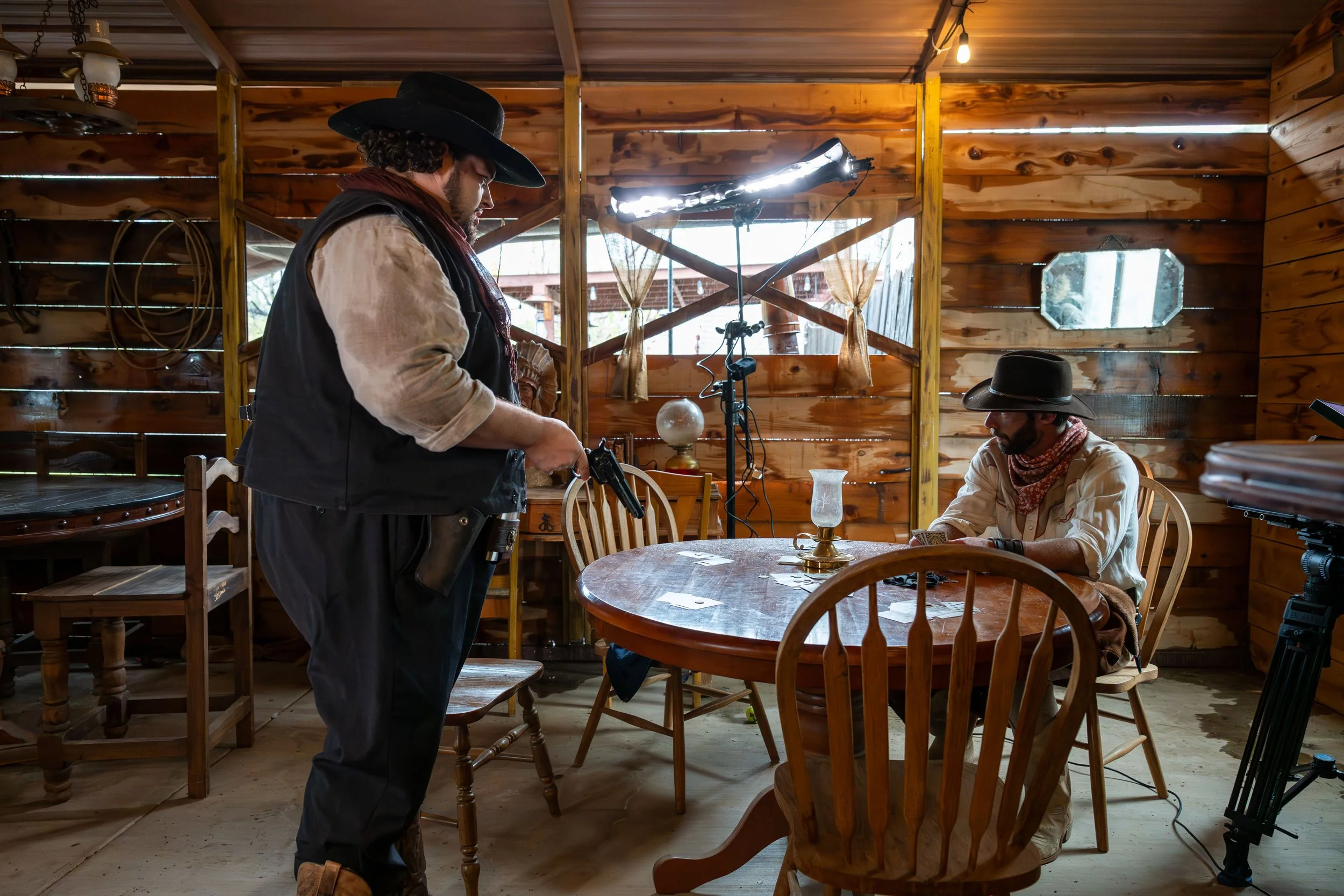
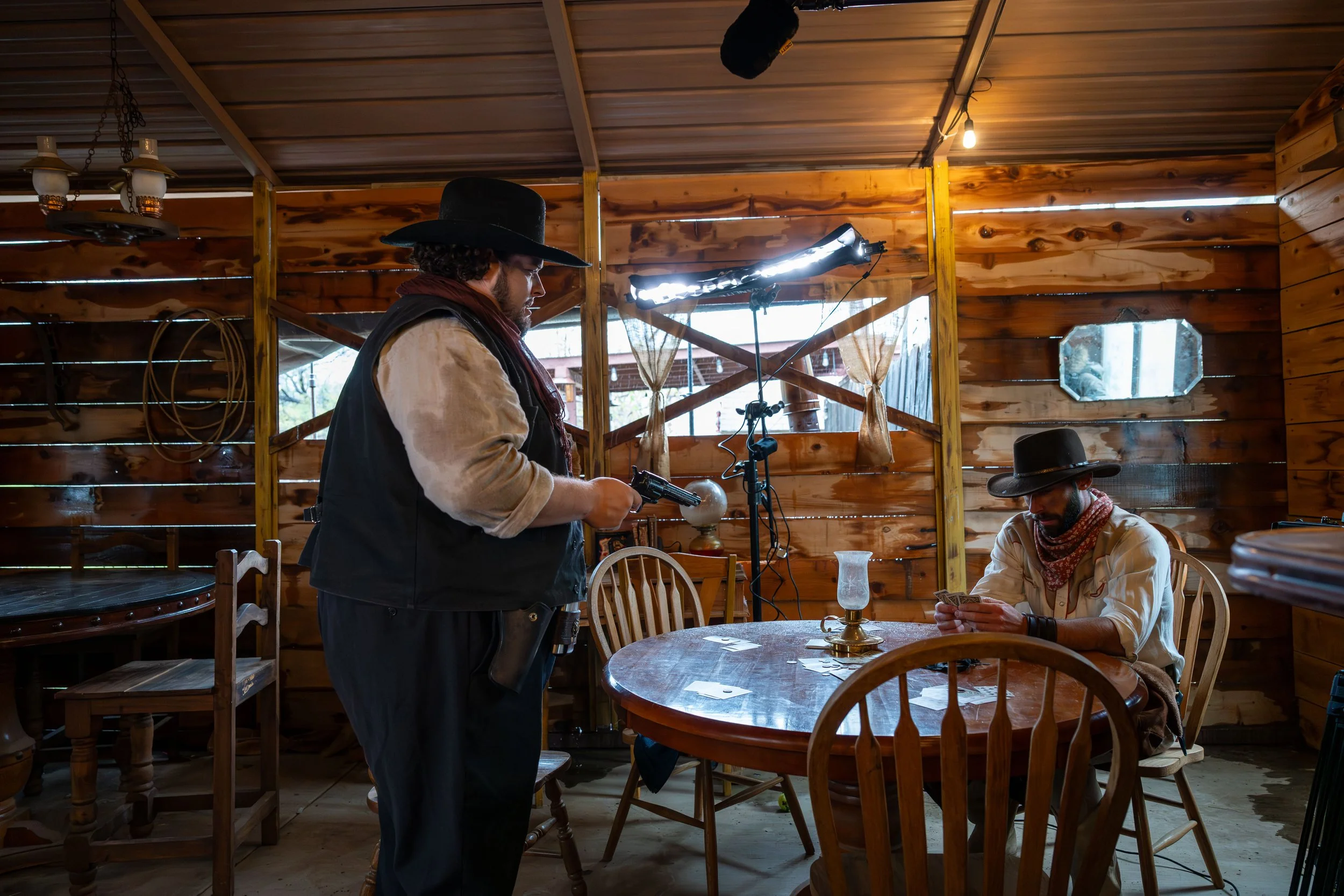
This is one of my favorite shots of the film. It's the introduction to our drifter, Heath McCourt. This was the widest shot we would do in the card table setup. Heath (Joe Zieja) is being keyed one Nanlite tube with a grid on it. The spill on his shoulder is the ambient light coming in through the window on the right hand side of frame, giving us that great edge separation on both him and the card table.
Landon Dunn’s Reverse Shot
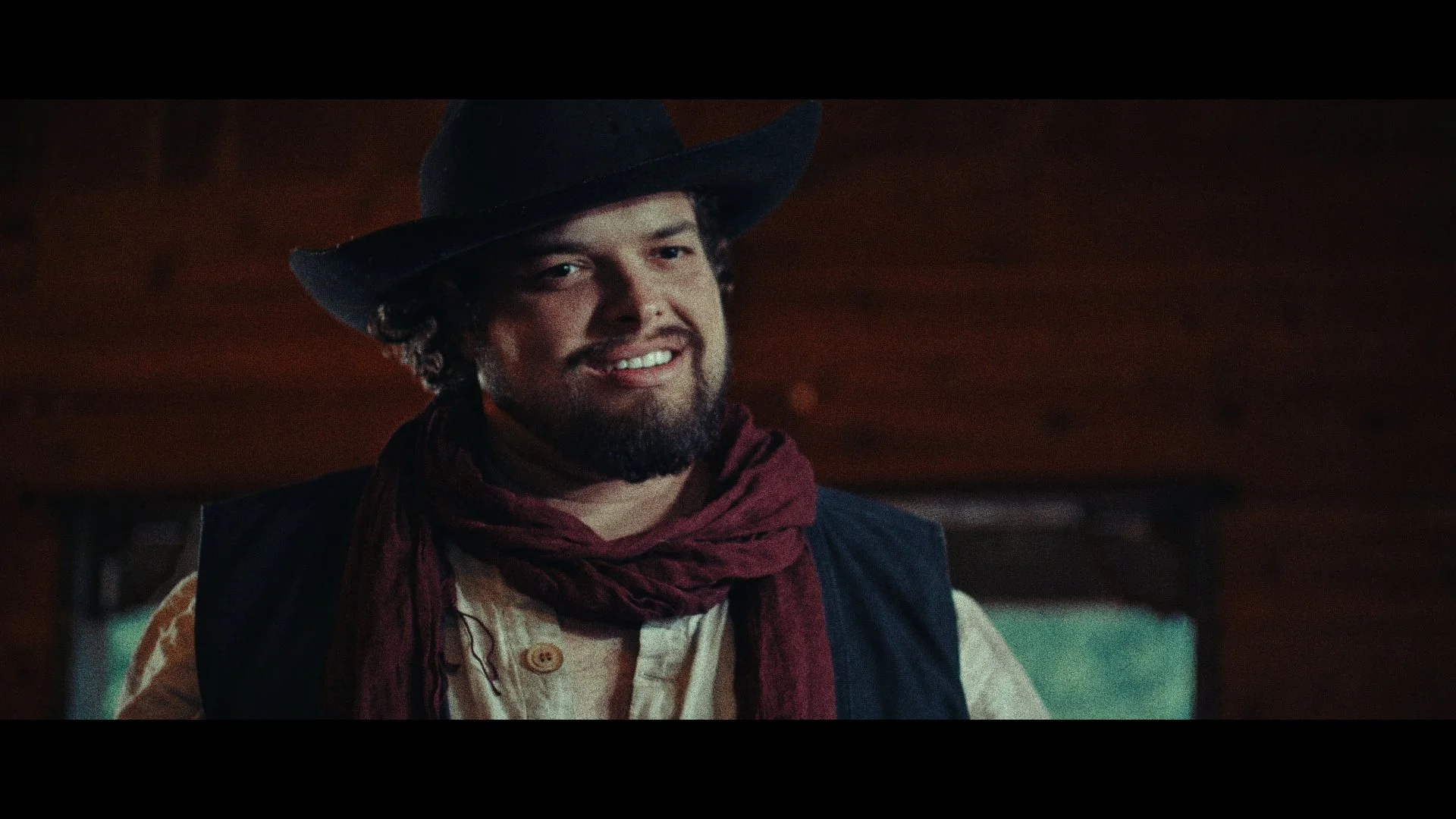
Reverse shot on Landon Dunn as he's kind of a conversation at the card table. For the reverse, one of our crew members Hollywooding the pavo tube give him a little bit of an edge. Then we just turned the second pavo tube that was the key for Heath at the table. Just turned that around and that became his key light.
The Bar
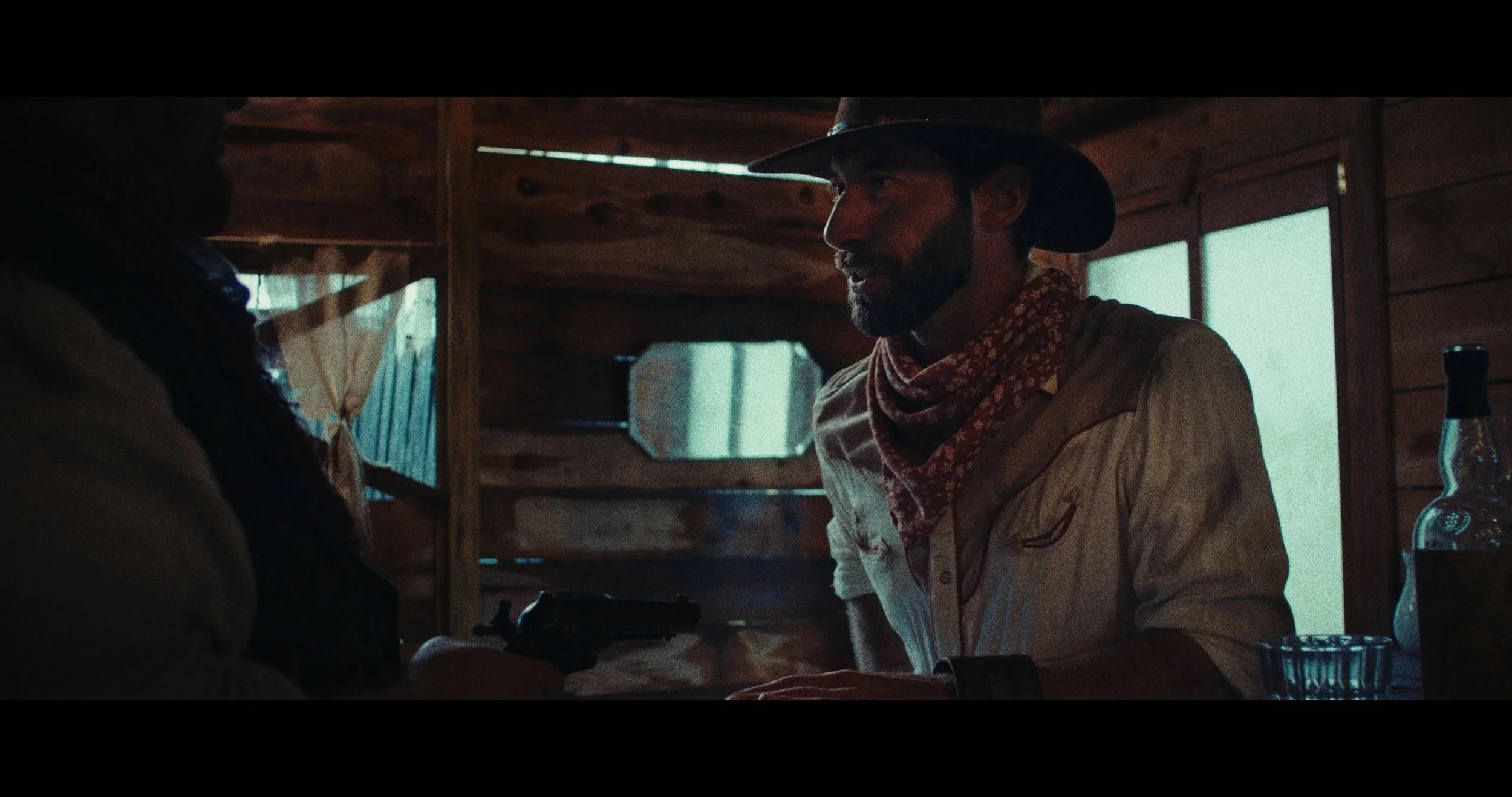
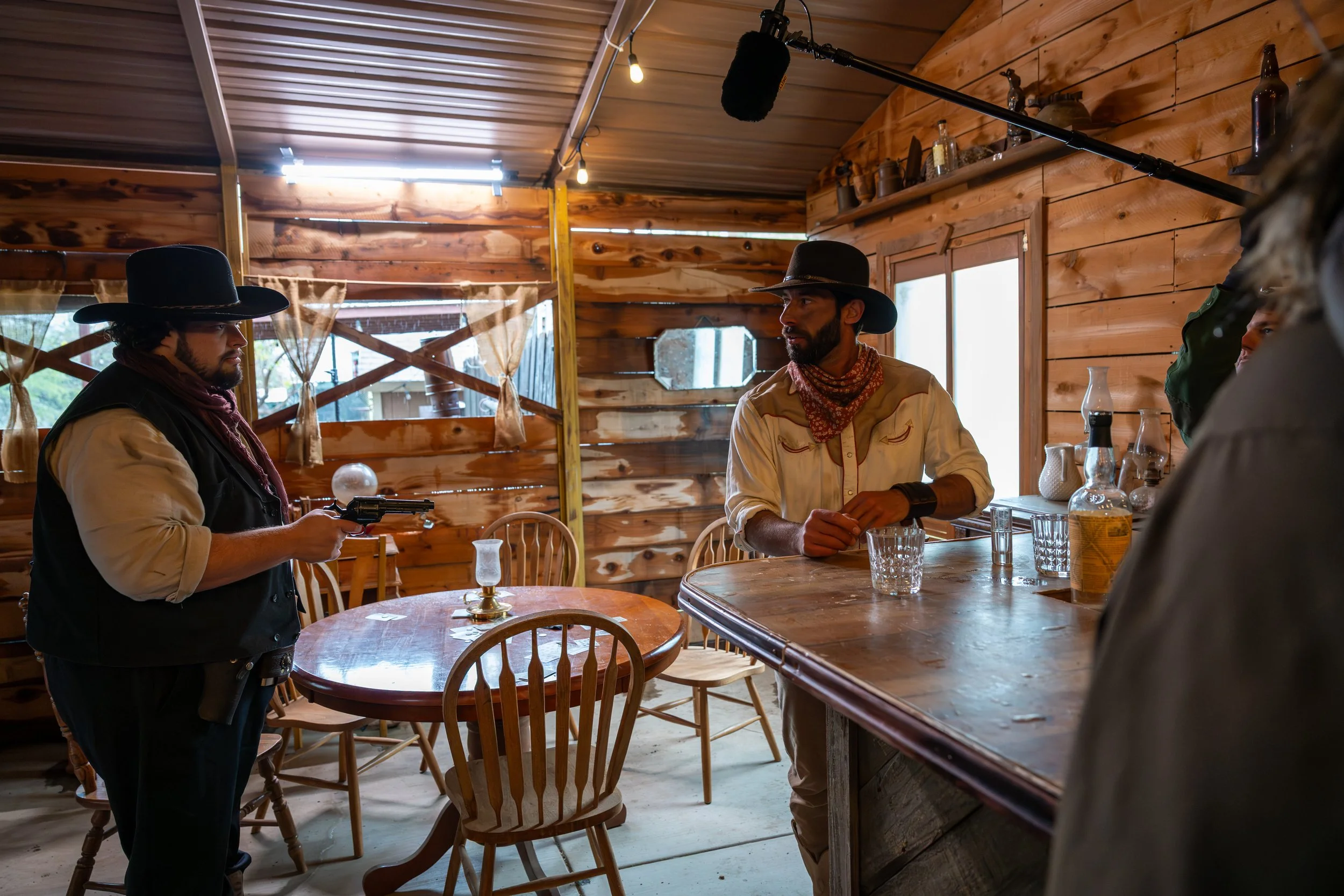
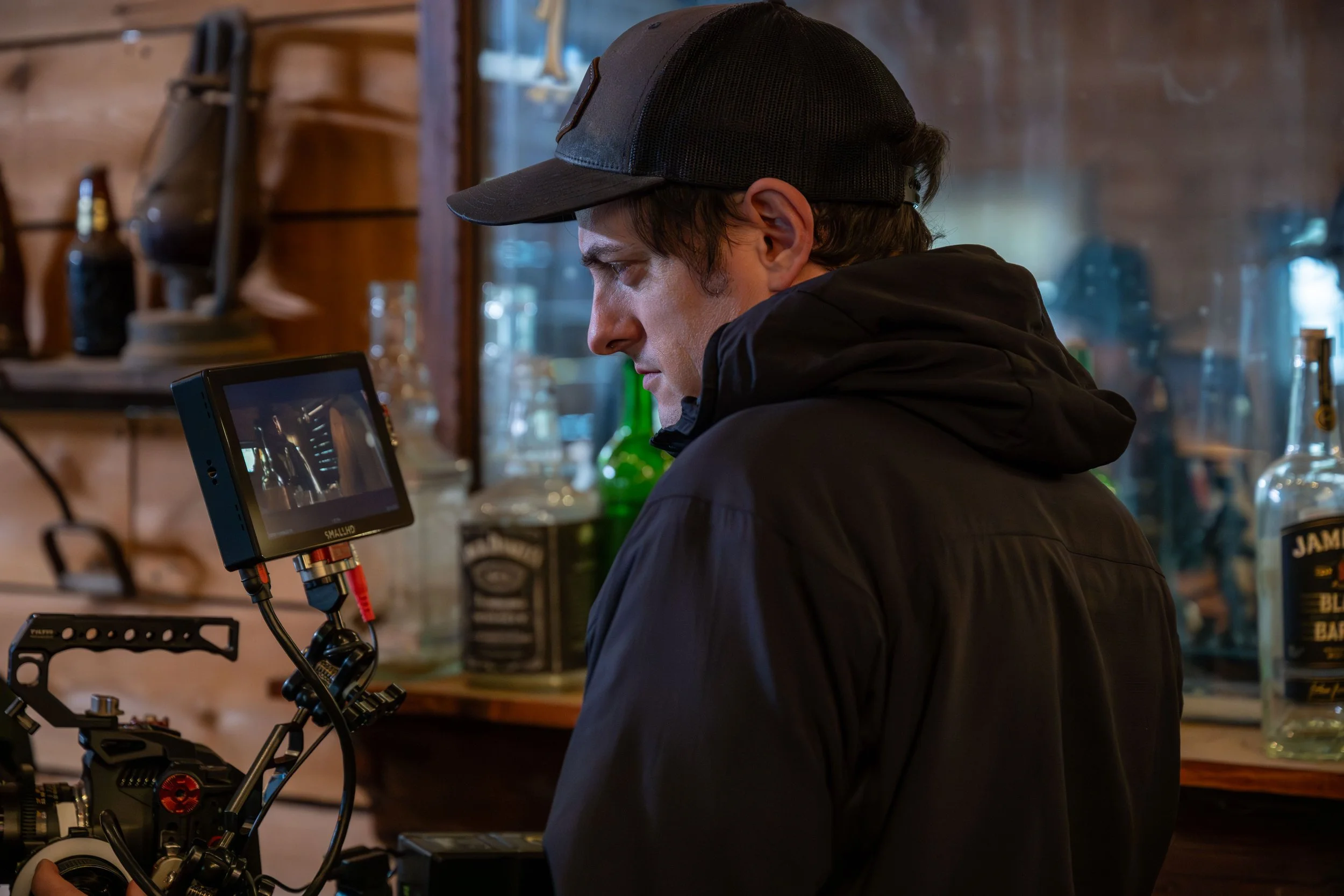
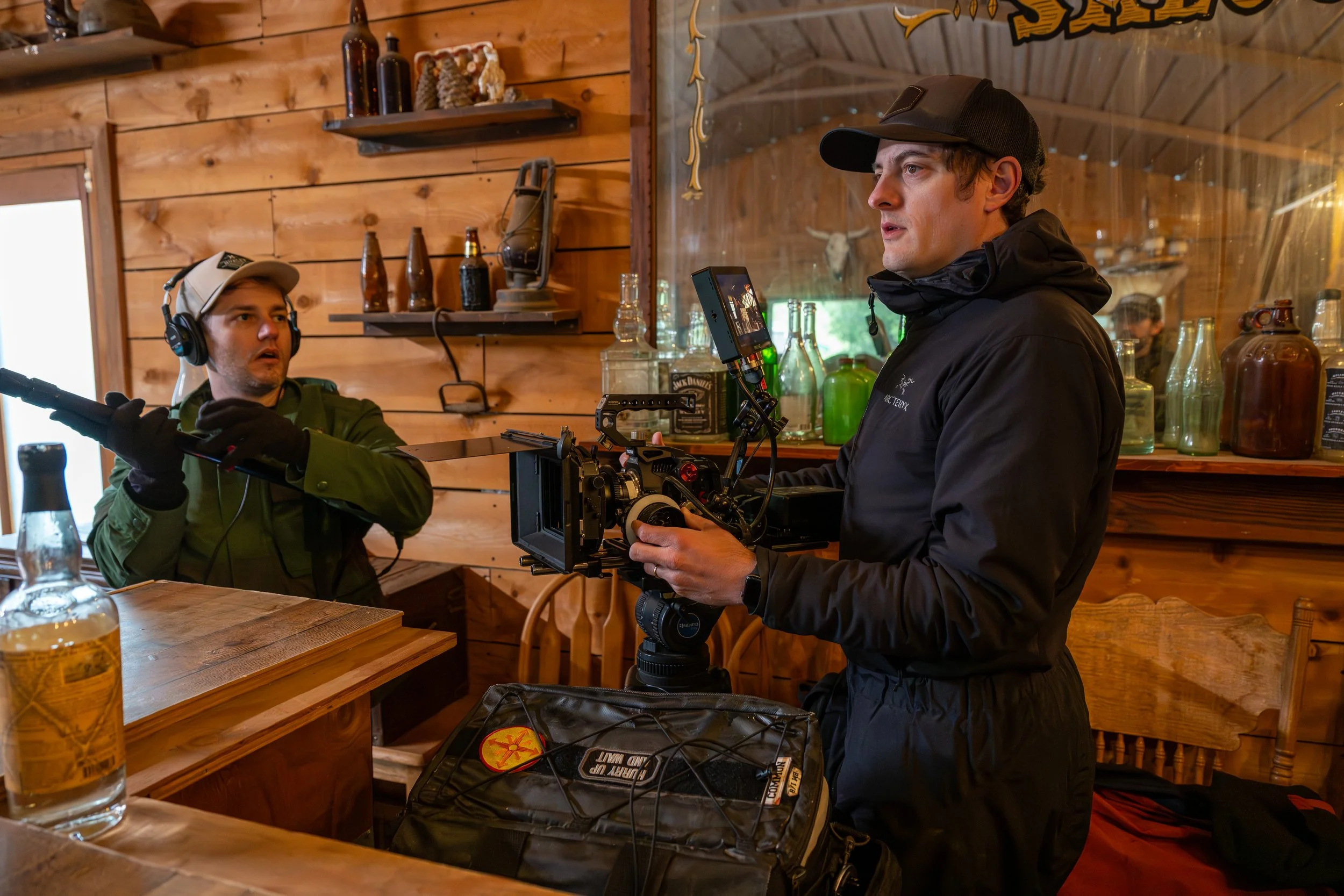
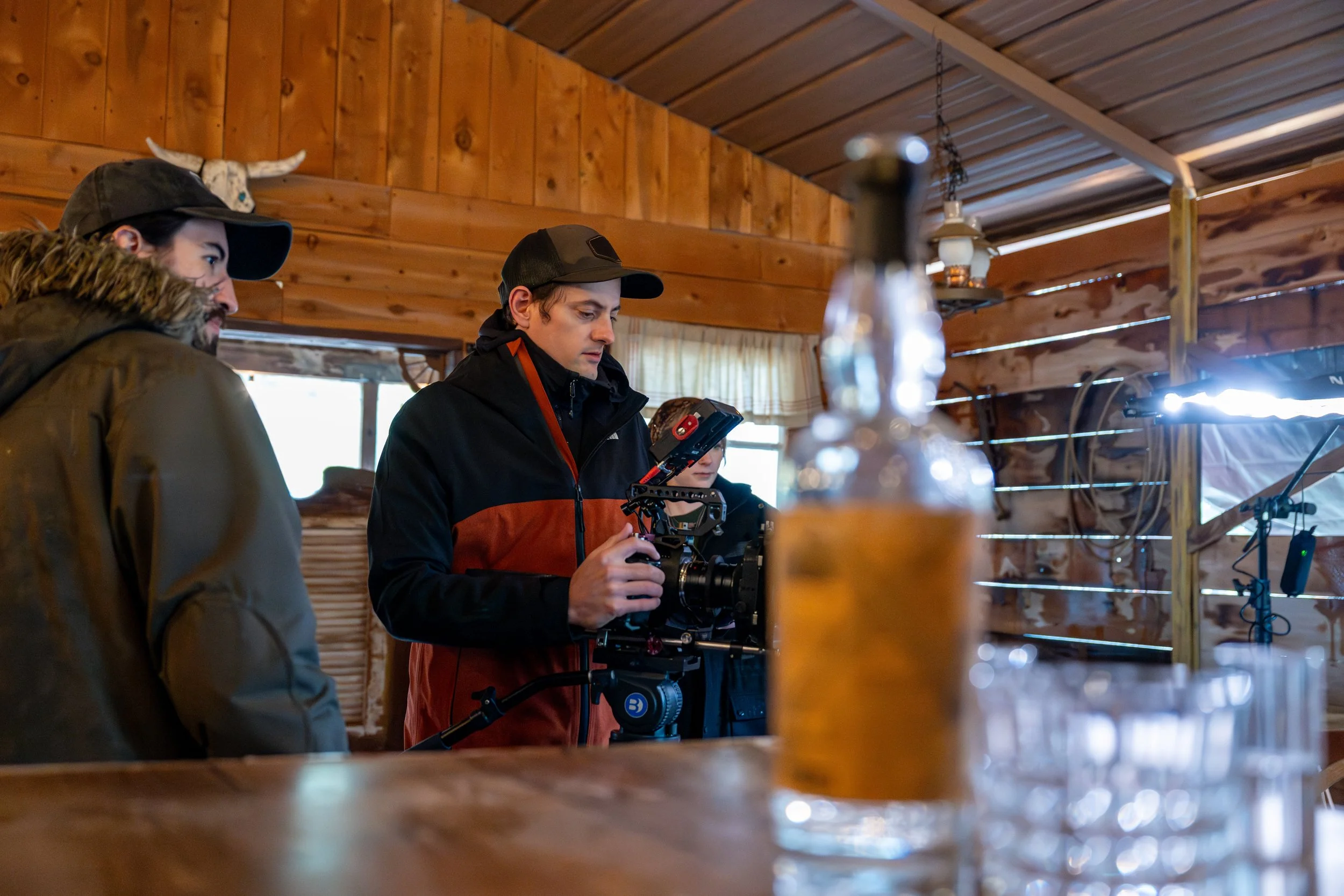
I used elements at the bar like bottles to add foreground depth in a lot of these shots. The key light is just the one nanlite stuck up on the ceiling. We took the grid off it to help get a little bit more broad wash of light.
Profile Shots
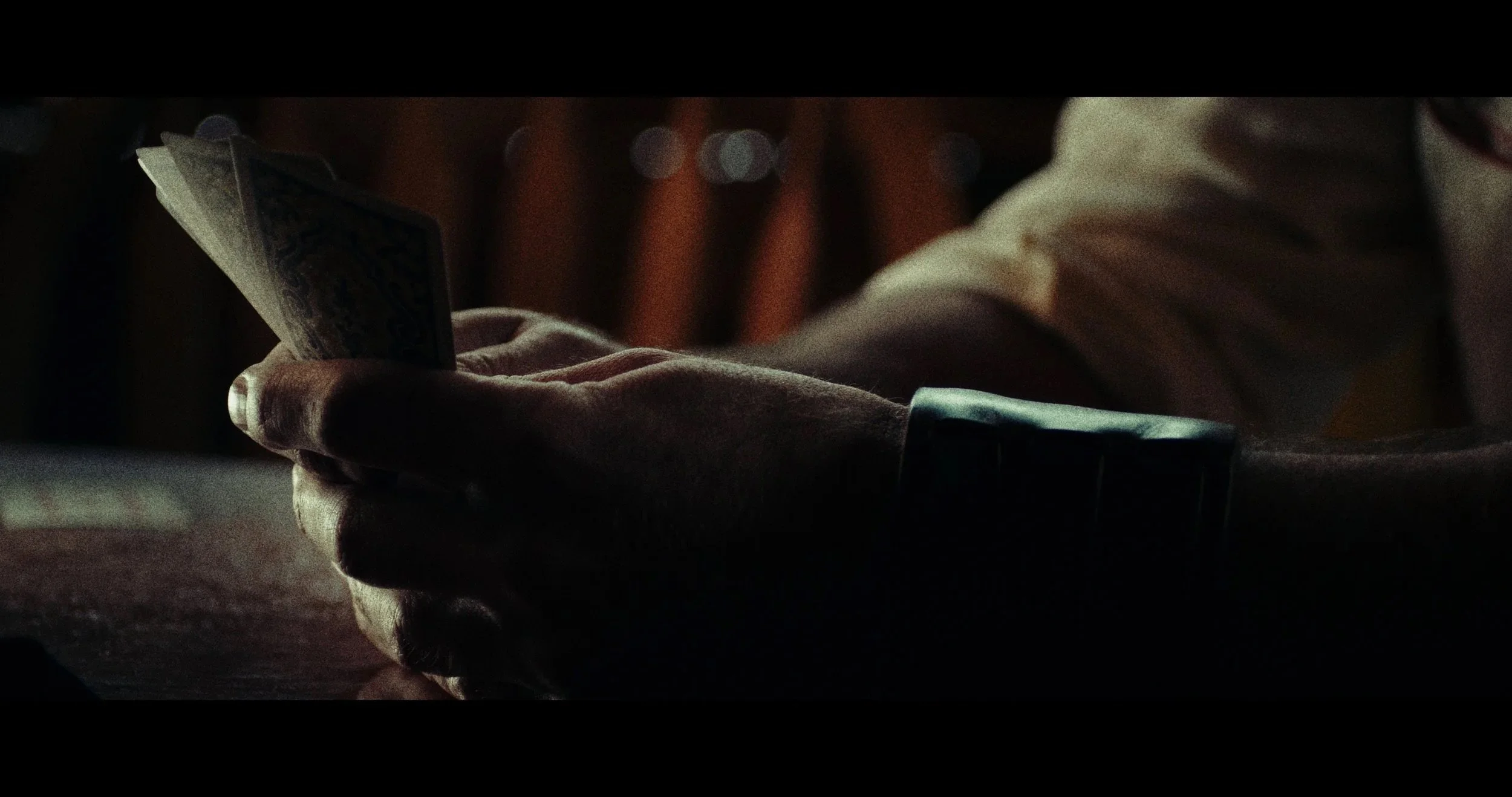
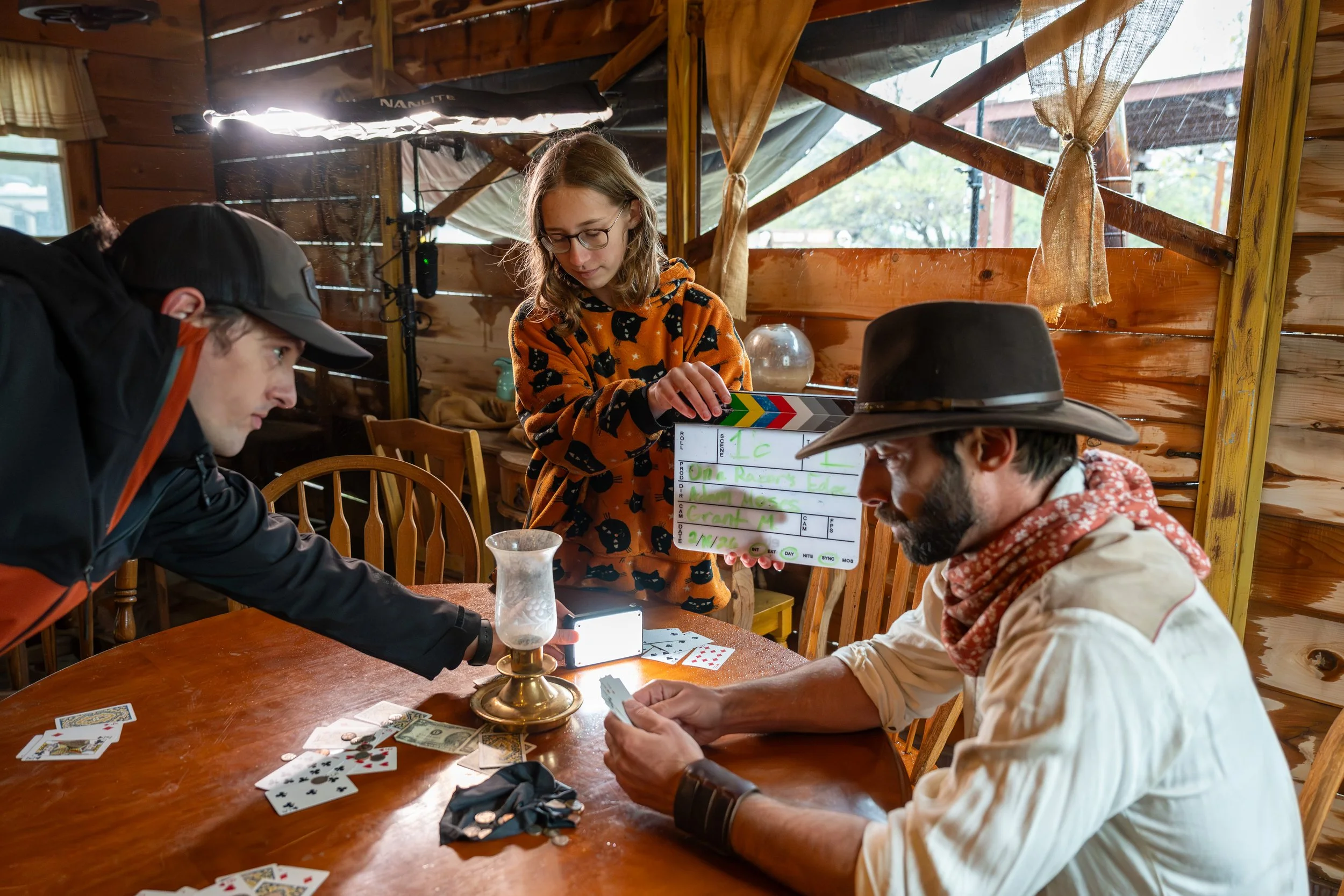
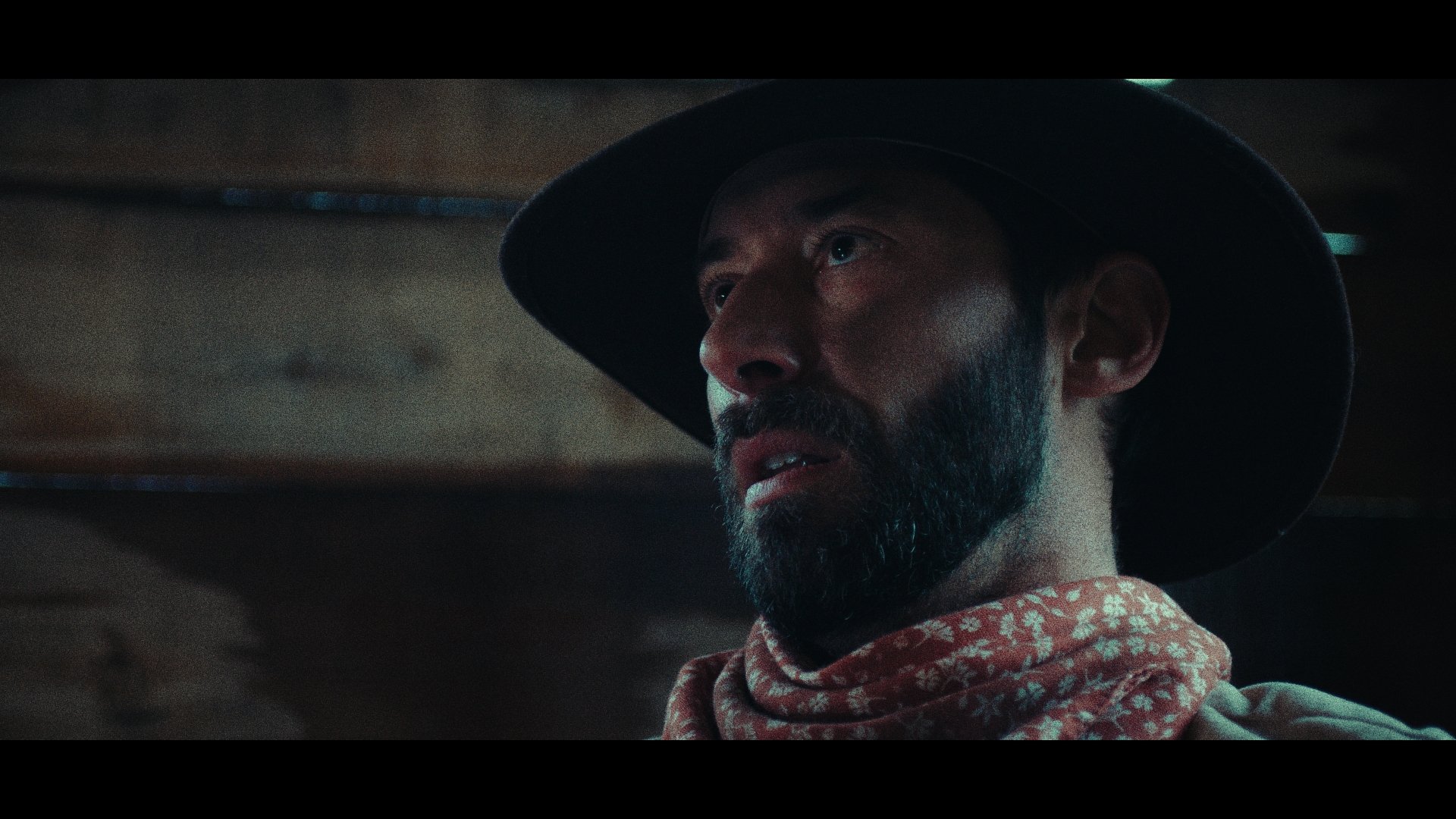
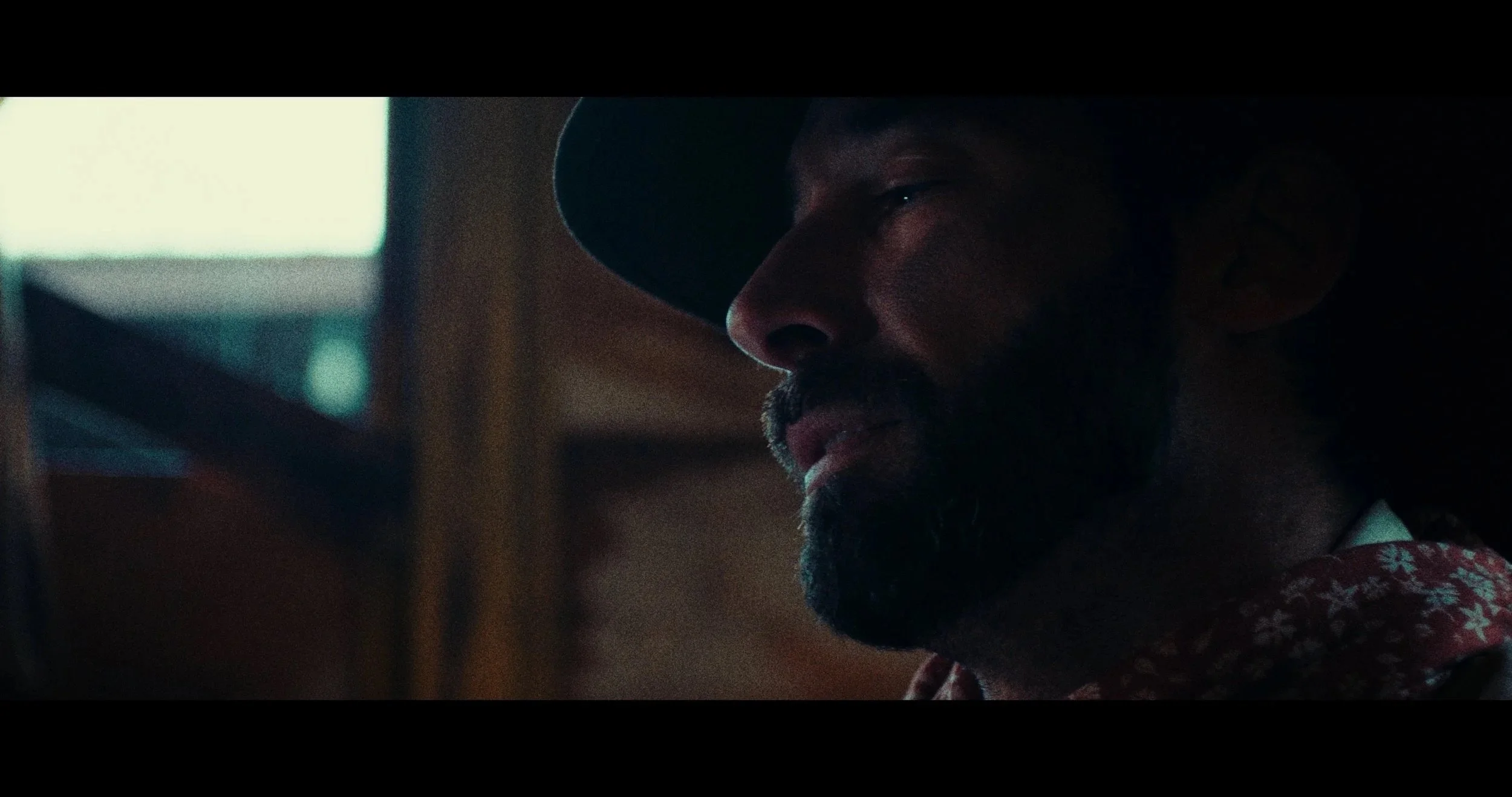
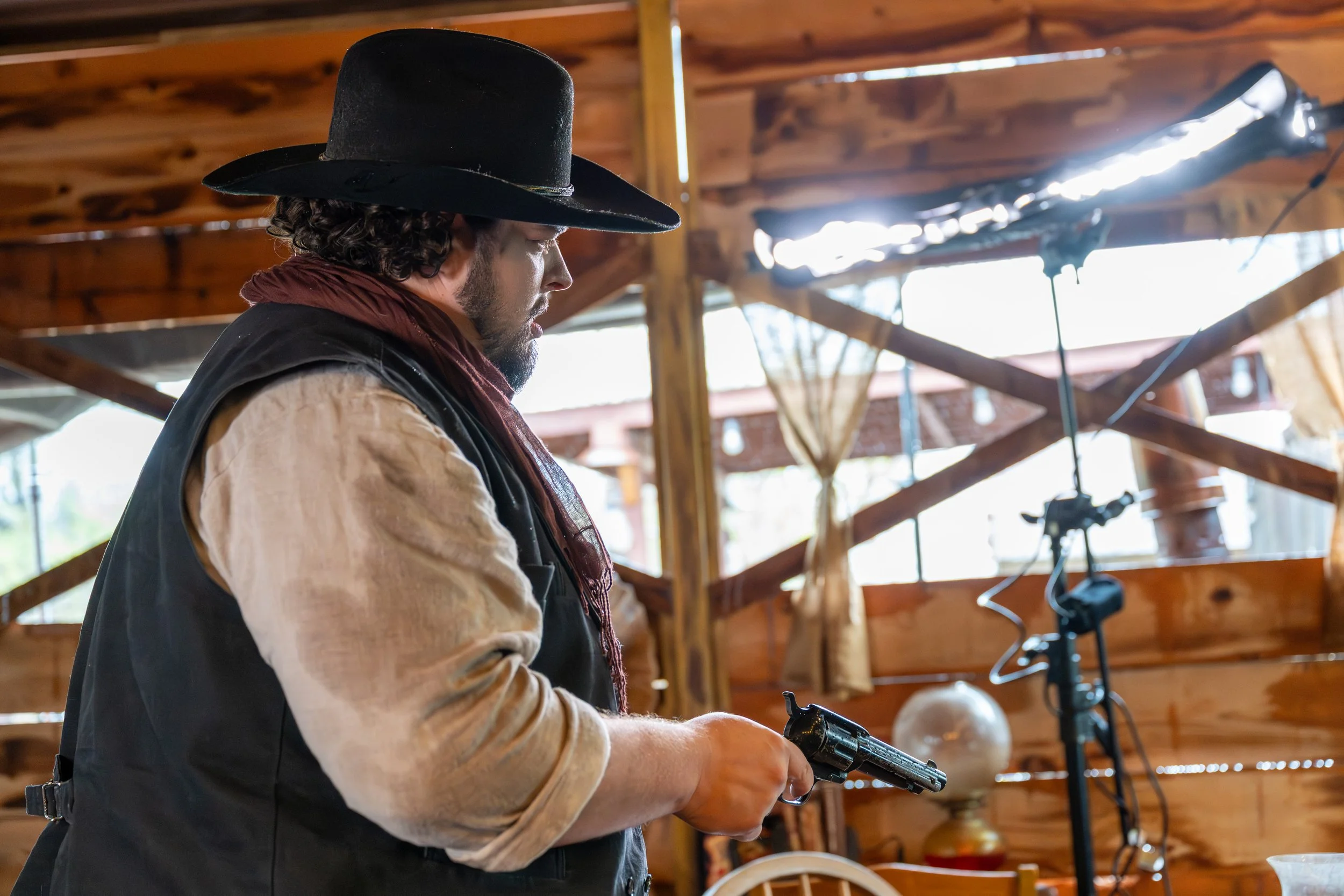
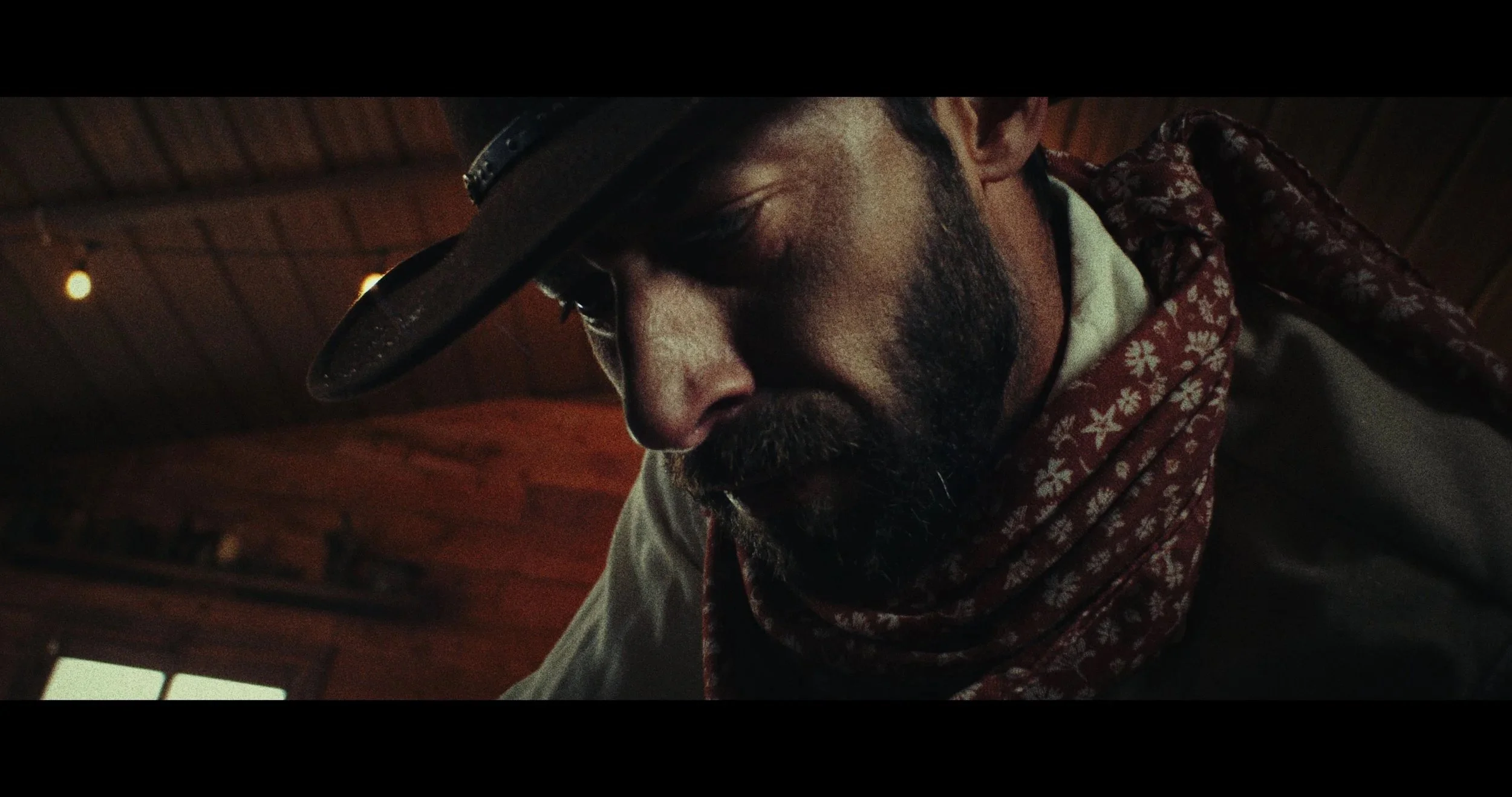
For these profile shots, that was also just keyed with the Pavo tube lights and the ambient window light. The little bit of eye light you see is from a Rosco DMG dash. That gives us just a little bit of pop in his eyes when he is looking down, and gives the eyes a little bit more life.
Shooting Handheld For The Climax
When building out the shot list, Adam and I had talked about shooting the majority of the film on a tripod to let the actor’s performances build the tension in the scene. The camera is a fly on the wall throughout the majority of the film. However, we made the decision to shoot the final scene of the film handheld for a couple of reasons. First we wanted the final showdown to feel more reactive and unsteady.
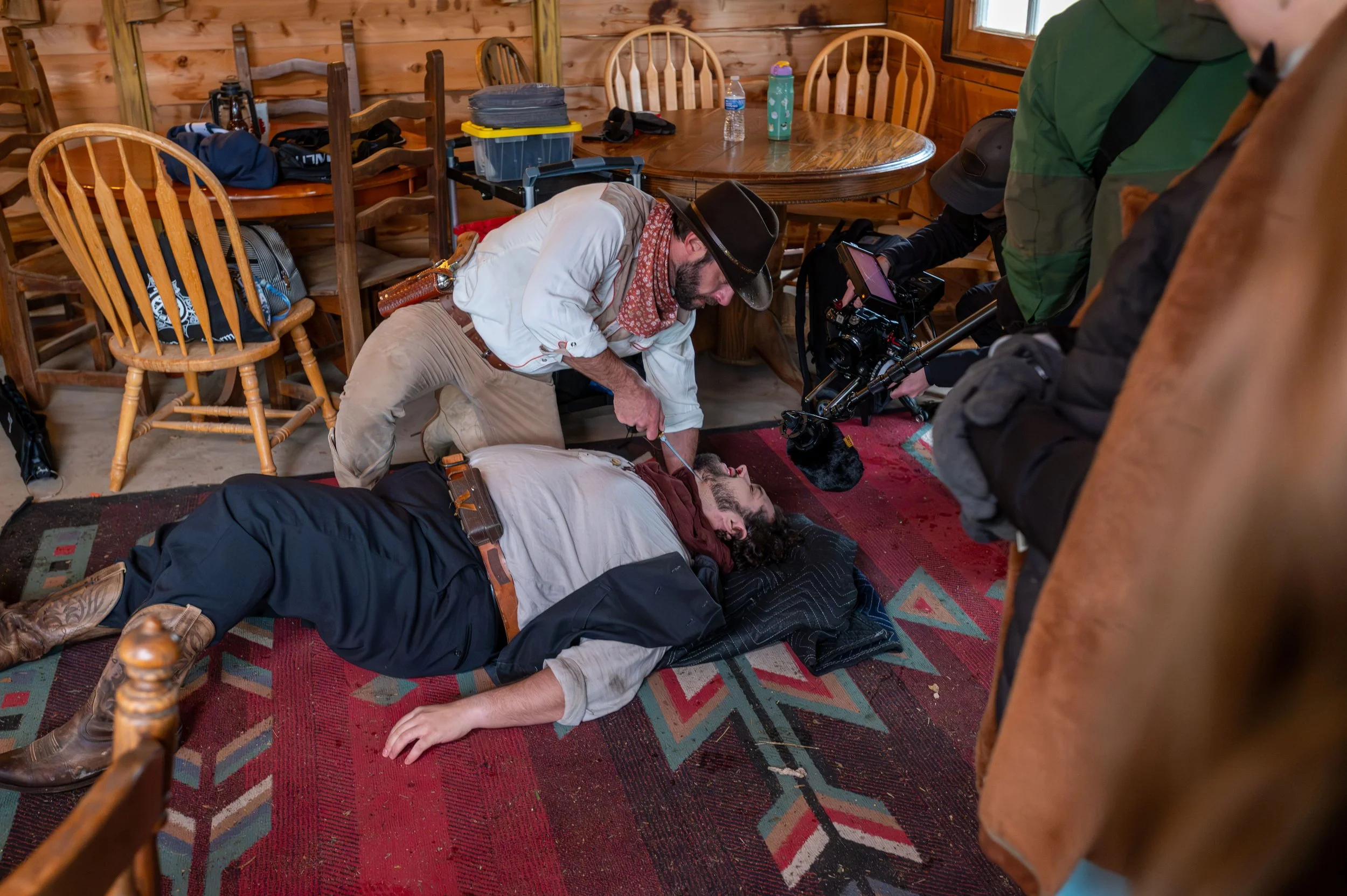
Originally we planned on getting dedicated coverage on both character’s sides of the fight, however due to the time constraints at the location we were running up against the clock to get this final scene in the can so we could wrap out on time. We had two takes to get it right, and I decided to play the whole scene in a roaming wide shot, swinging between the actors for their lines, which not only added some great energy and urgency to the scene but also helped minimize the coverage we’d need so we could make our day. We shot this whole scene on a 21mm lens as well, getting right up in the actor’s faces to bring their fight that much closer to the audience.
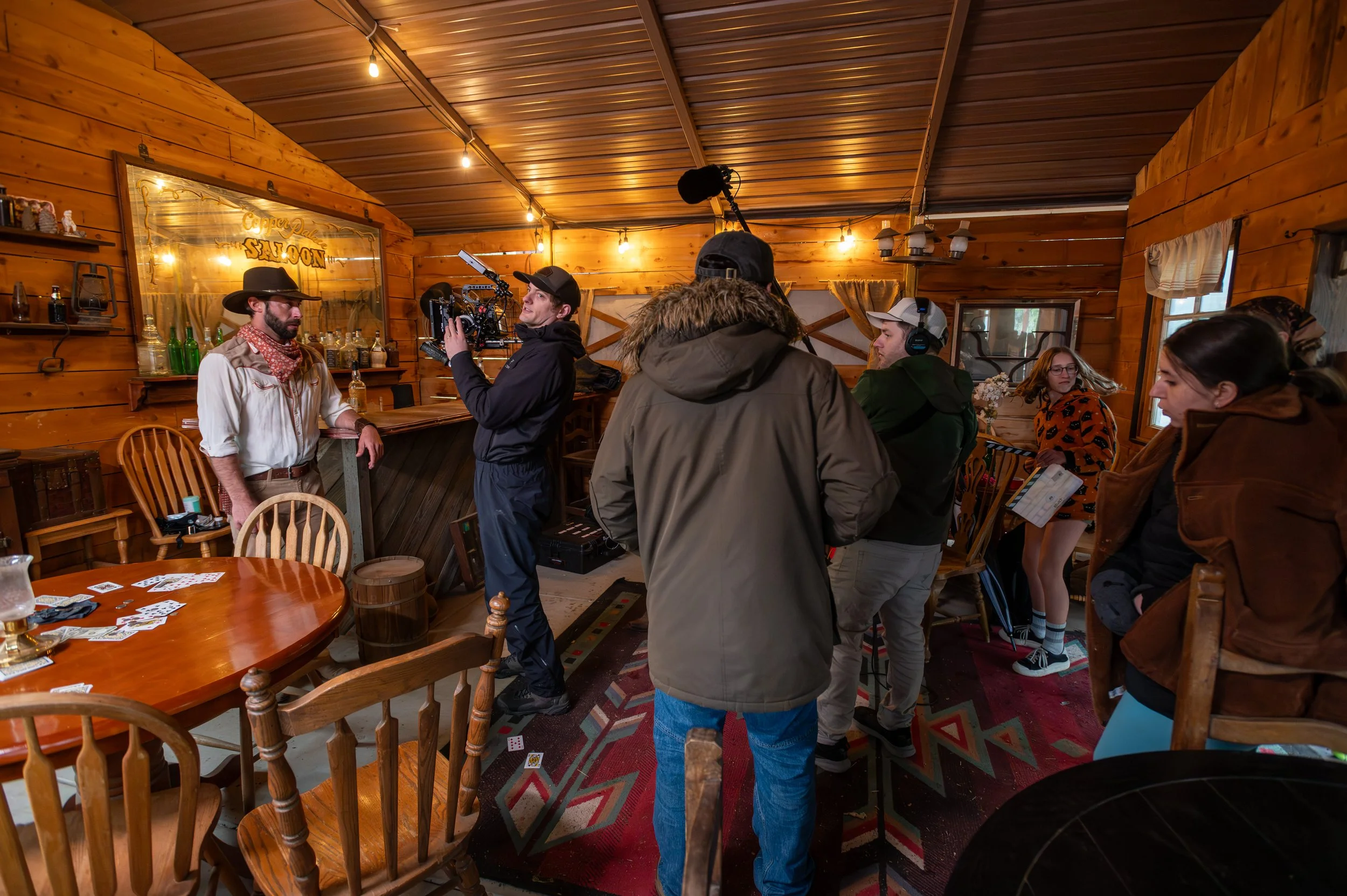
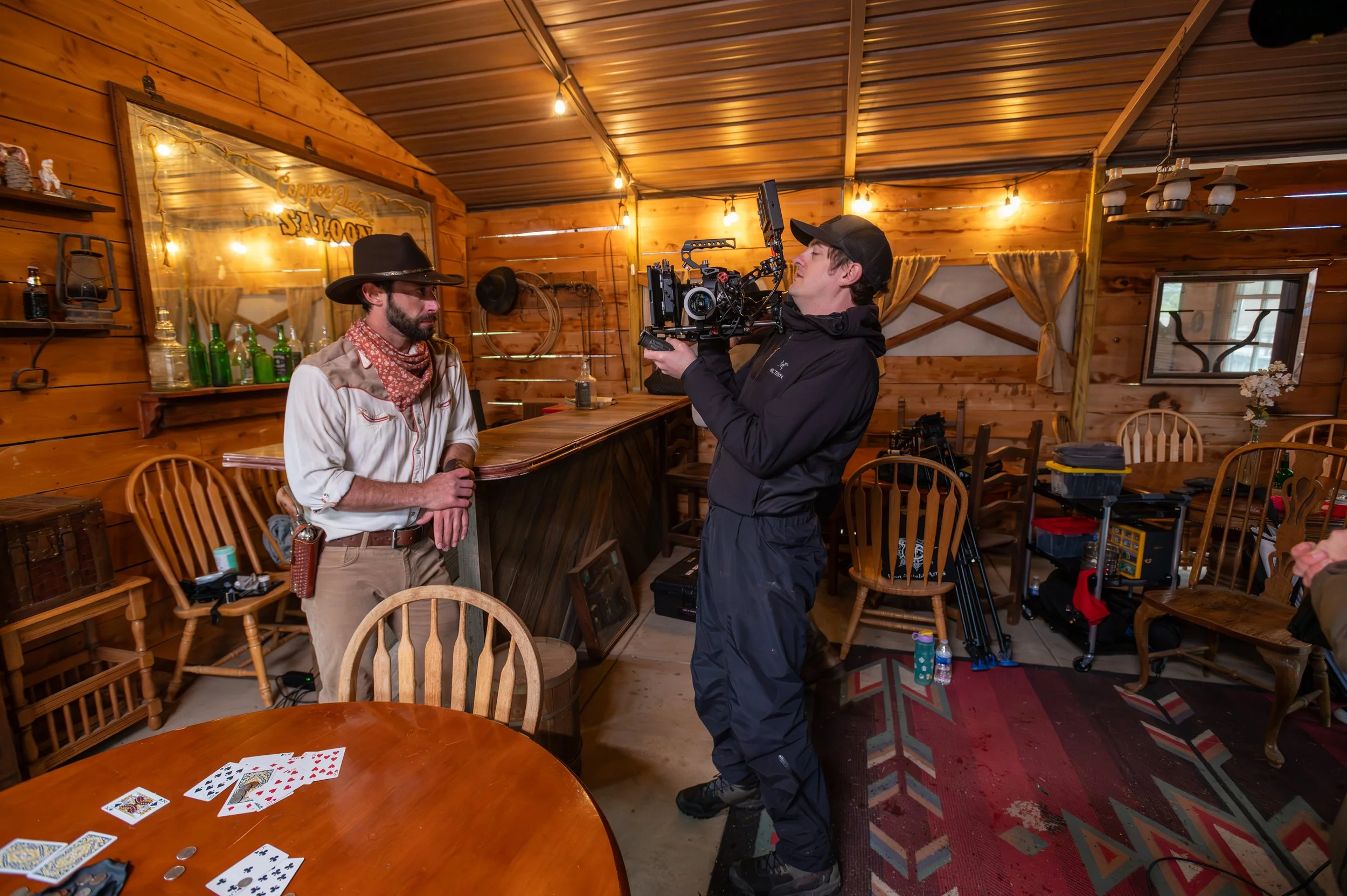
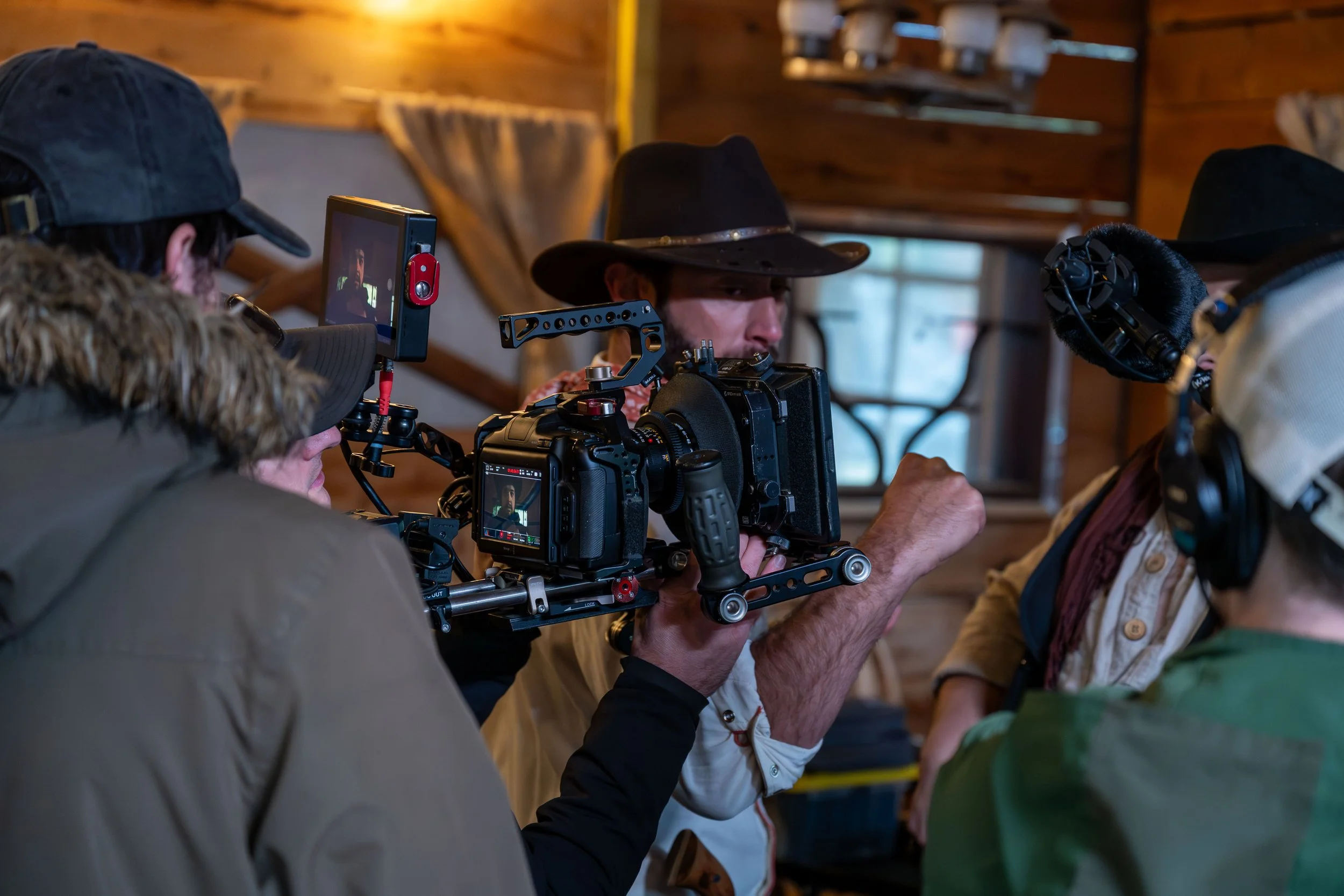
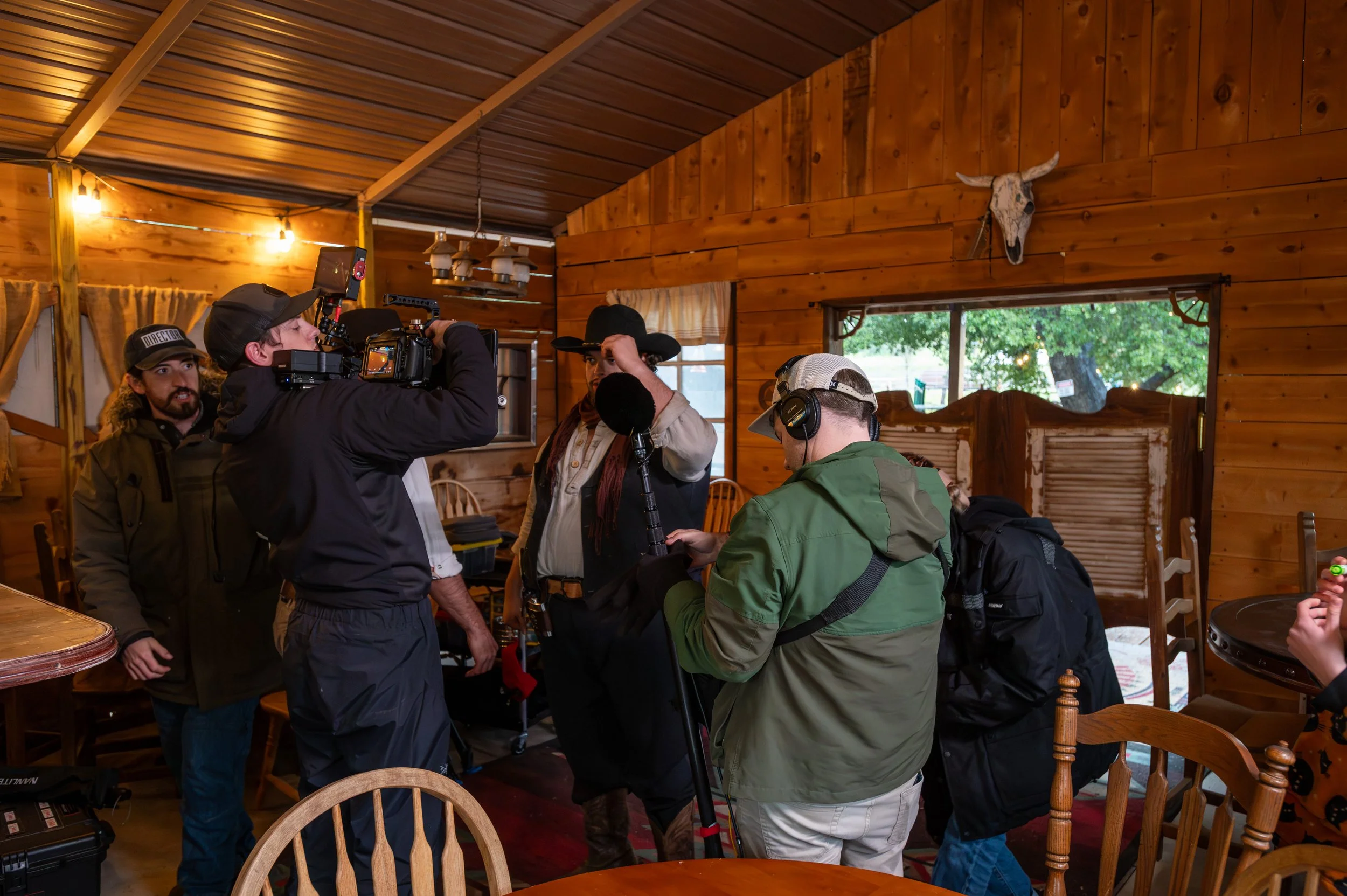
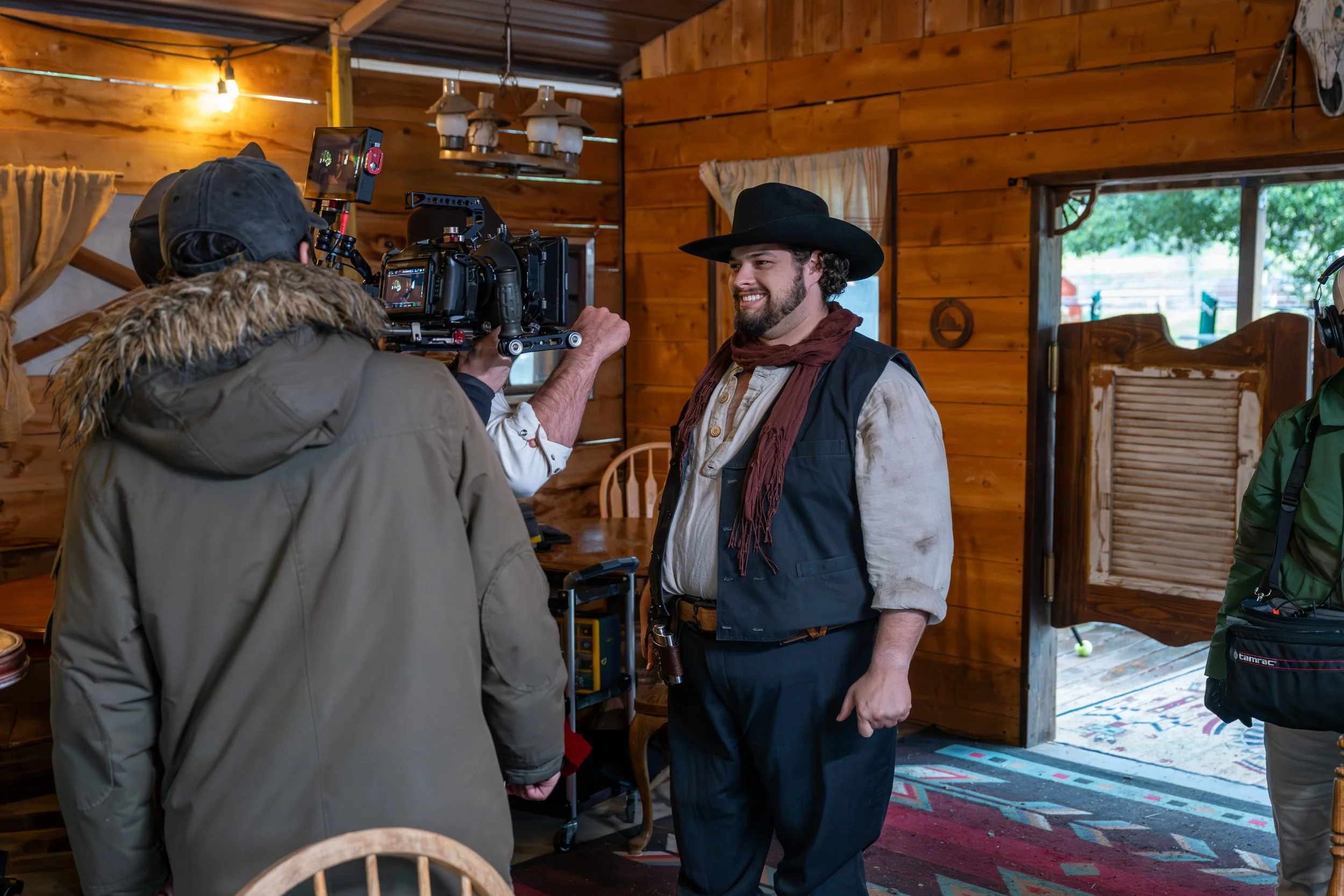
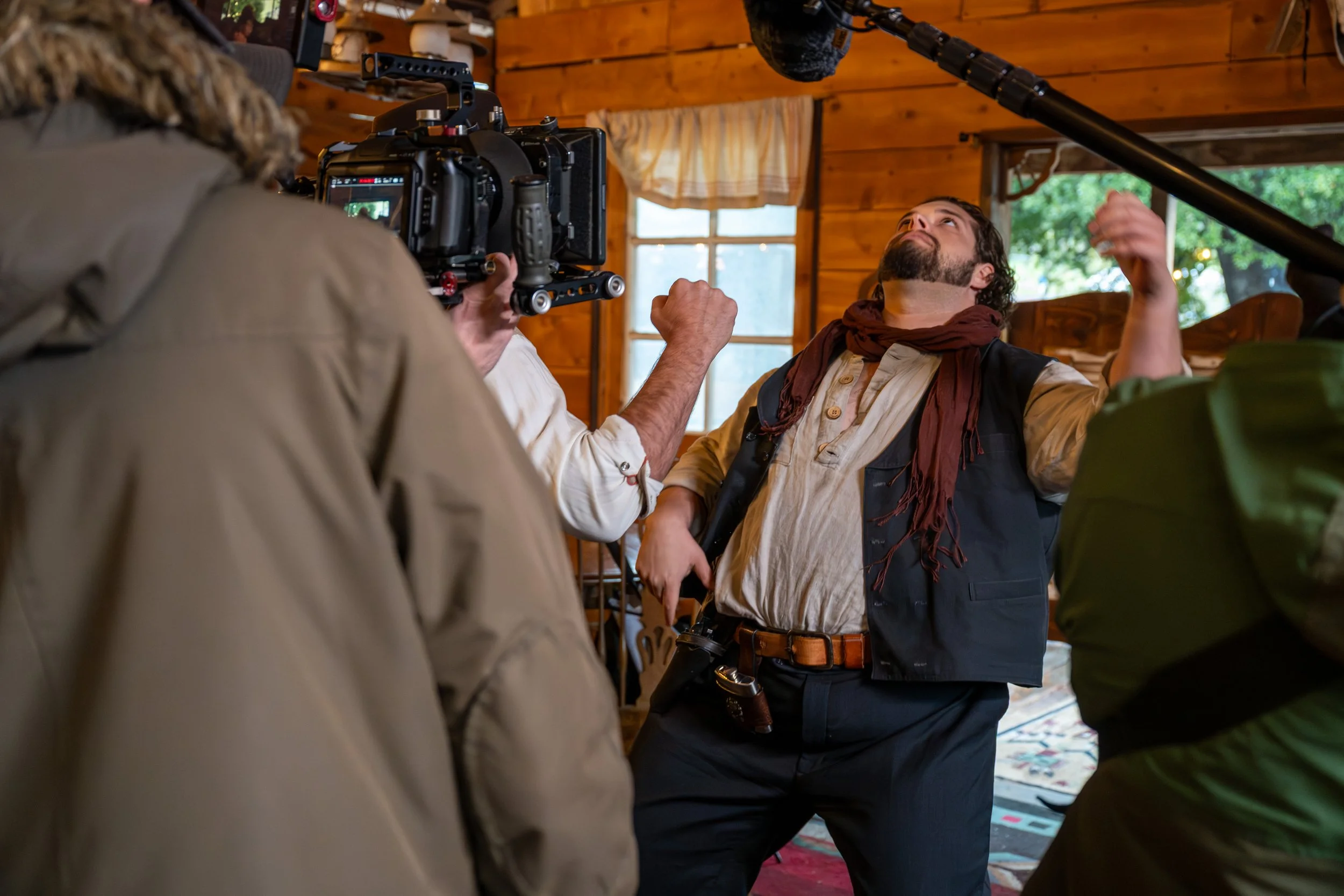
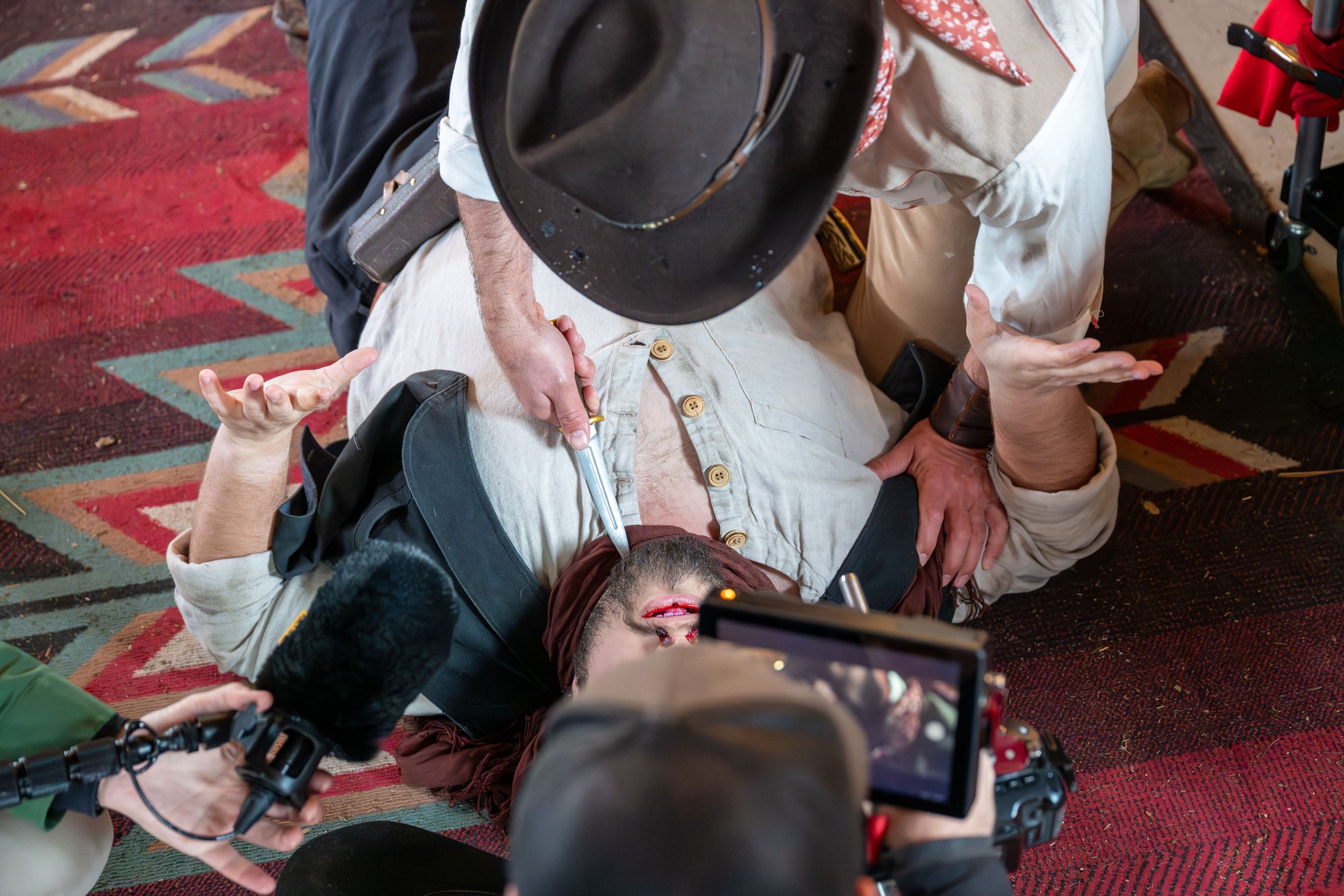
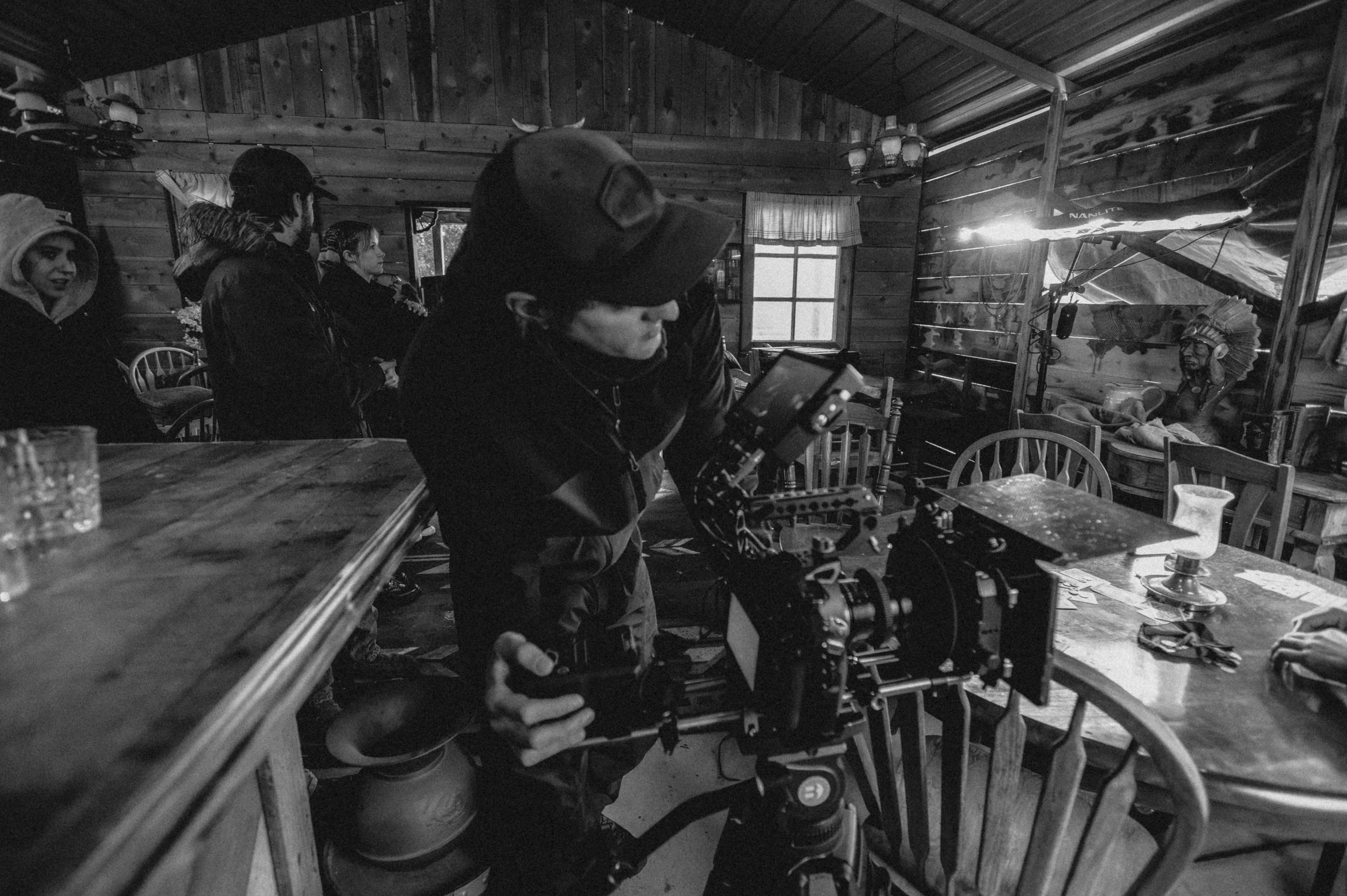
Coming off the tripod for the climax — the only handheld work in the entire film.
Operating the camera handheld while pulling my own focus.
Sound and the ADR process
After the final scene shot and we began to wrap out our gear the rain finally let up. It was great to wrap up while not getting soaked in the process, but the weather’s timing was exactly the opposite of what we needed to capture clear sound during the shoot! Because the saloon set has a sheet-metal roof the rain hitting it made every line of dialogue muddied under a wall of noise. Despite everything our sound recordist Chris Conley could do on the day, we ended up needing to do a full ADR for the entire film with our post-sound producer Paul Stafford. So every line of dialogue you hear in the film was re-recorded after the fact and perfectly matched back to picture.
Jacob’s view from the ADR booth.
It was an unfortunate thing to discover in post, and delayed the film’s release by a few weeks due to coordinating ADR recording with the actor’s schedules. But it came with an unexpected upside. Because we were rebuilding the sound from scratch anyway, editors Adam Moses and Khaalid Cannon had the time to build out the world more by adding thunderclaps and rain texture back in deliberately for emphasis during certain moments in the film. While initially I felt that the rain that had cost us a lot, by making our dialogue unusable it ended up giving the sound design for the film an atmosphere and a sense of escalating tension that perfectly clean audio wouldn’t have had.
Conclusion
At the end of the day, this project taught me another lesson in flexibility and adaptability, in particular how to quickly come up with a new plan when the weather is the exact opposite of what you had planned for. While we didn’t get the hard sunlit classic western look, we came away with something that has an even more unique look and ultimately makes the film stand apart from others in the genre.
None of this would have come together without the rest of the cast and crew: executive producer Joe Zieja, production company Hot Lunch Productions, director Adam Moses, writer Max Raimi, 1st AD Aleis Work, our stars Joe Zieja and Jacob Dalton, sound recordist Chris Conley, MUA Katie Lynn, costumers Aleis Work and Sarah Moses, editors Adam Moses and Khaalid Cannon, and our ADR engineer Paul Stafford. I served as both DP and colorist on this one.
I hope this behind the scenes look into the making of this film gave you some insight into my process and how much location, schedule, and the weather play a key role in your lighting plan. If you want to keep up with me and my latest projects, follow me on Instagram, and feel free to share your thoughts or suggestions for future blog topics and lighting breakdowns in the comments.